Osteopathy for Runner Knee Recovery and Return to Running
A familiar ache begins around the front or side of the knee, perhaps after a longer run, a hill session, or an increase in weekly mileage. It may feel manageable at first, yet each run starts to require more caution. Osteopathy for runner knee recovery looks beyond the painful area itself, helping identify movement restrictions, loading patterns, and compensations that may be keeping the knee irritated.
Runner’s knee is a broad term, often used for pain around or behind the kneecap. For many runners in Tokyo, it becomes especially frustrating because running is more than exercise. It may be the reliable break between demanding workdays, a social routine, or preparation for a race. A thoughtful recovery plan should protect that role in your life while giving the tissues time and conditions to settle.
Why runner’s knee is rarely only a knee problem
The knee sits between the hip and the foot, so it responds to what happens above and below it. Limited hip mobility, reduced ankle motion, calf tightness, a stiff big toe, or poor control through the pelvis can all change how force travels through the leg. None of these findings automatically explains pain, but together they can influence the load placed on the knee with every stride.
Training changes matter too. A sudden increase in distance, faster intervals, hill running, new shoes, a return after time off, or insufficient recovery can exceed what the body is currently prepared to tolerate. Sometimes the problem is not one dramatic error. It is the gradual accumulation of small stresses while sleep, work pressure, travel, or strength training have changed in the background.
This is why a runner may rest briefly and feel better, then experience the same pain as soon as regular training resumes. Rest can calm symptoms, but it does not always address the factors that made the knee vulnerable under running load.
How osteopathy for runner knee recovery can help
Osteopathic care starts with a detailed, whole-body assessment. Your practitioner will discuss when the pain began, what aggravates it, your recent training history, prior injuries, footwear, work demands, and your goals. The physical examination may include the knee, hip, pelvis, ankle, foot, spine, and surrounding soft tissues, as well as how you move during simple functional tasks.
The aim is not to force the body into a single ideal posture or running style. Every runner has individual anatomy, history, and training demands. The objective is to find meaningful restrictions or asymmetries and determine whether they may be contributing to inefficient loading, reduced mobility, or protective tension.
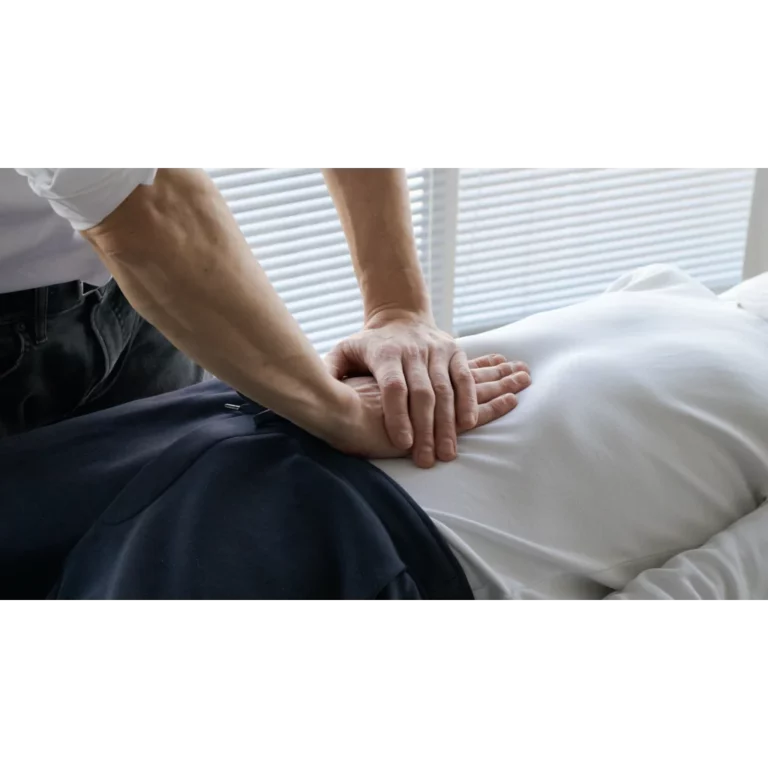
Hands-on treatment may include gentle joint mobilization, soft-tissue techniques, myofascial work, and osteopathic approaches to improve mobility and reduce unnecessary tension. Treatment is adapted to your comfort and the sensitivity of the injury. If the knee is acutely painful, the session should not become an endurance test.
For some patients, easing stiffness in the ankle and calf improves the body’s ability to absorb force lower down the leg. For others, treatment may focus more on hip movement, pelvic control, or recovery from an old injury that has altered their running pattern. The knee is always assessed directly, but it is not treated in isolation.
What a sensible return to running looks like
Recovery is usually most successful when hands-on care is paired with sensible load management. Complete rest is occasionally appropriate, particularly after a significant flare-up, but it is not the only option. Depending on your symptoms, a temporary reduction in distance, speed, hills, or frequency may allow you to remain active without repeatedly provoking the pain.
Pain during activity needs context. Mild discomfort that stays stable and settles quickly may be managed differently from sharp pain, swelling, limping, locking, or symptoms that worsen over the following day. Your plan should reflect your presentation rather than a generic rule found online.
A gradual return often begins with short, easy runs on predictable terrain. Running every other day may be more tolerable than consecutive days at first. Distance should increase only when the knee remains calm during the run and recovers well afterward. Hills and speed work can be valuable training tools, but they commonly return later because they place greater demand on the knee and surrounding muscles.
Cross-training may help maintain fitness while running volume is reduced. Walking, cycling, swimming, or strength work can be useful choices if they do not aggravate symptoms. The best option depends on the individual. A cyclist with knee pain may need a different alternative than a runner who can comfortably use an elliptical trainer.
Strength and control support the hands-on work
Manual therapy can improve comfort and movement quality, but resilient running also depends on capacity. A personalized program may include progressive work for the calves, quadriceps, hamstrings, glutes, and trunk. Exercises are selected according to what you can do well now, not simply because they are popular with runners.
For example, a runner who struggles to control the pelvis on a single-leg squat may benefit from a different emphasis than someone with good control but limited ankle flexibility. Strength work should challenge the body without causing a prolonged flare-up. Progression, consistency, and good technique matter more than chasing difficult exercises too early.
When running shoes and technique deserve attention
Shoes can influence comfort, but they are rarely a complete explanation for runner’s knee. A new model, a major change in heel-to-toe drop, worn-out cushioning, or a sudden switch to minimalist footwear can affect how load is distributed. It is worth considering, particularly when symptoms started soon after a change, but replacing shoes alone may not resolve an underlying training or mobility issue.
Running technique can also be discussed when appropriate. Overstriding, cadence, trunk position, and control through the hip may affect knee load. However, technique changes should be introduced carefully. Trying to alter several aspects of your stride at once can create new discomfort in the calf, Achilles tendon, foot, or hip. Small, monitored adjustments are generally more useful than a complete overhaul.
What to expect from an osteopathic appointment
At Osteopath Tokyo, care is one-on-one and tailored to the runner in front of us. You will have time to explain what has changed in your training and how knee pain is affecting daily life, whether that means missing weekend trail runs, avoiding stairs, or feeling uncertain before an upcoming event.
Your treatment plan may combine hands-on care with practical advice about activity modification, recovery, and exercises. The number of visits varies. A recent, mild problem linked to a clear training change may settle relatively quickly, while persistent pain, repeated flare-ups, or several contributing areas can require a more gradual process. Clear reassessment is essential: if progress is not occurring as expected, the plan should be adjusted and further evaluation considered.
When knee pain needs medical assessment
Osteopathic treatment is not a substitute for medical evaluation when symptoms suggest a more serious injury. Seek prompt assessment for substantial swelling, inability to bear weight, a knee that gives way repeatedly, locking, fever, redness or warmth around the joint, severe pain after trauma, or pain that continues to worsen despite reducing activity.
Persistent pain can also require collaboration with a physician, sports medicine specialist, or physical therapist. Imaging is not needed for every painful knee, but it may be appropriate when the clinical picture raises concern for structural injury or when recovery does not follow a reasonable course.
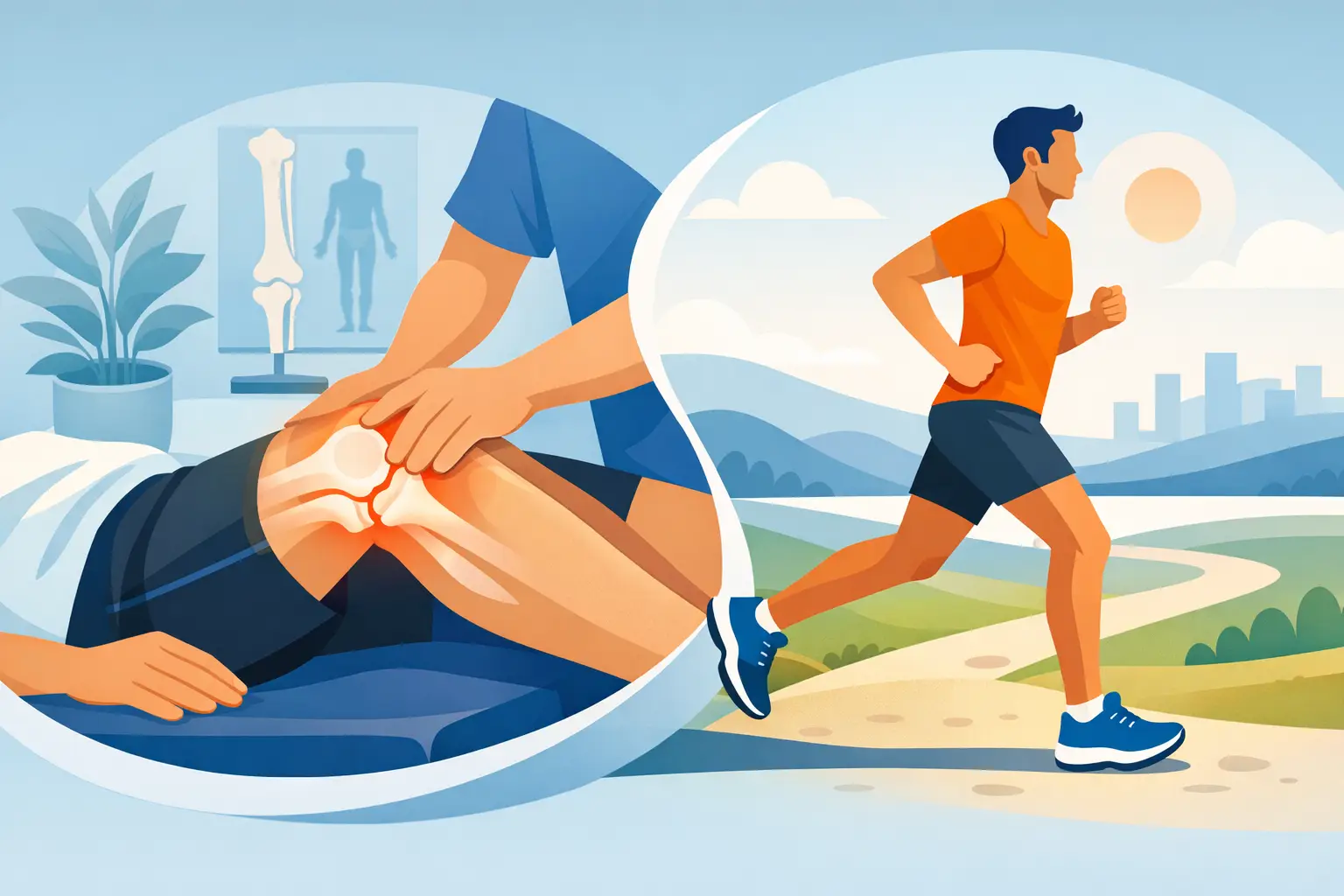
A painful knee does not have to mean abandoning running. With an individualized assessment, carefully managed training load, and attention to the entire movement system, many runners can move from protecting every step to trusting their stride again.