Migraine Osteopathy Review for Lasting Relief
A migraine can turn an ordinary Tokyo workday into a calculation of light, noise, nausea, and how quickly you can get home. A migraine osteopathy review should begin with that reality: hands-on care is not a promise of an instant cure, but it can be a considered option for people whose neck tension, jaw strain, posture, sleep disruption, or stress load appear to contribute to their attacks.
Osteopathic care takes the whole person seriously. Rather than treating the head in isolation, an osteopath assesses how the neck, upper back, jaw, breathing mechanics, nervous system, and daily demands may be affecting symptoms. For some people, this offers meaningful relief and fewer aggravating factors. For others, it works best alongside medical management, migraine medication, or lifestyle changes.
What a Migraine Osteopathy Review Should Consider
Migraine is a neurological condition, not simply a severe headache. It can involve throbbing pain, sensitivity to light or sound, nausea, visual changes, fatigue, difficulty concentrating, and symptoms that linger after the pain has eased. Some people experience aura; others do not. Attack frequency and intensity can also change with hormonal shifts, travel, dehydration, poor sleep, skipped meals, and prolonged screen time.
This distinction matters because responsible osteopathic treatment does not suggest that every migraine comes from a misaligned neck or a tight muscle. Migraine has multiple drivers, and the role of manual therapy is often to identify and reduce physical contributors that may be adding strain to an already sensitive system.
A detailed assessment may explore when attacks began, how often they occur, where pain starts, and whether neck or jaw discomfort appears before the headache. It should also consider previous injuries, work posture, exercise, sleep, stress, menstrual patterns when relevant, medication use, and the treatments you have already tried. This context helps determine whether osteopathic care is appropriate and what a realistic treatment plan might look like.
How Osteopathic Treatment May Help Migraine Sufferers
Many migraine patients also live with persistent tension in the neck, shoulders, upper back, or jaw. This does not mean tension is the sole cause of migraine. It may, however, lower the threshold at which an attack is triggered or make an episode feel more intense and prolonged.
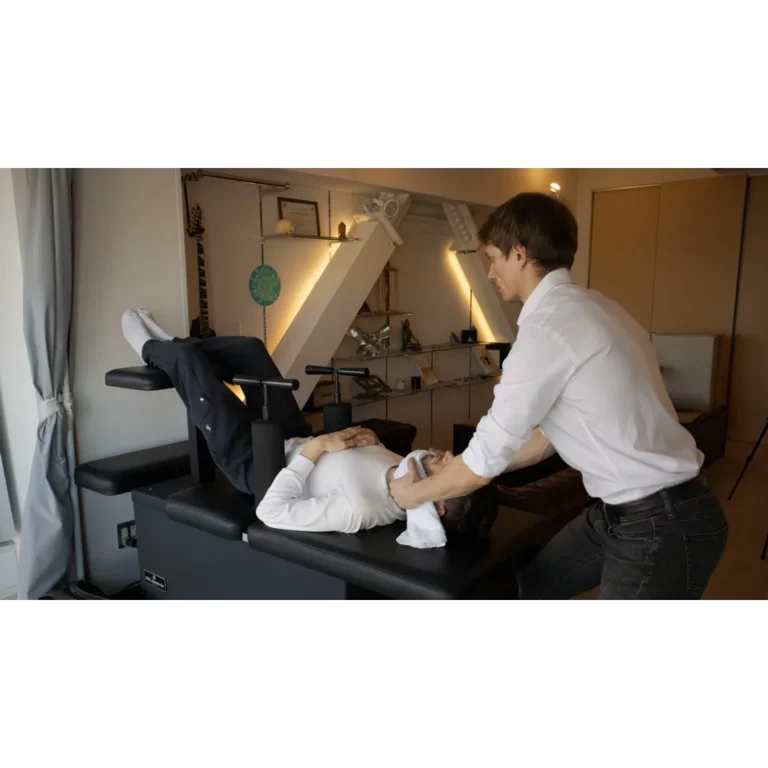
Treatment is tailored rather than standardized. Depending on the assessment, an osteopath may use gentle soft-tissue work, joint mobilization, myofascial techniques, craniosacral or biodynamic approaches, and work around the jaw, neck, rib cage, and upper back. The intention is to improve mobility, reduce protective muscle guarding, support comfortable breathing, and calm an overloaded stress response.
For a patient who clenches their jaw during demanding meetings, for example, care may focus on the TMJ, neck muscles, and upper thoracic spine. For someone whose headaches worsen after long flights or laptop-heavy weeks, the focus may be on postural load, rib mobility, and strategies for changing position throughout the day. A runner with migraines after hard training may need a broader look at recovery, neck strain, hydration, and training volume.
The techniques used should feel controlled, respectful, and adapted to your comfort. More force is not better care. Particularly during or shortly after a migraine, a gentle approach is often more appropriate than aggressive manipulation.
What the evidence tells us
Research into manual therapy for migraine is still developing. Some studies suggest that manual approaches may help selected patients with migraine-related neck pain, headache frequency, or medication use. However, study quality varies, and results should not be overstated. Osteopathy is best viewed as a complementary part of a well-managed migraine plan, not a replacement for proper diagnosis or prescribed treatment.
The most encouraging results tend to come when care is individualized and paired with practical changes. These may include a more supportive workstation setup, regular meals, hydration, gradual exercise, sleep consistency, stress management, and medical review when symptoms or medication needs change.
What to Expect at Your First Appointment
A first appointment should not begin with treatment alone. It should begin with listening. You should have time to describe your migraines in your own words, including what you feel before, during, and after an attack. An osteopath will then perform a hands-on assessment of movement, tissue tension, posture, and areas that may be contributing to discomfort.
Your treatment plan may be conservative at first, especially if migraines are frequent, severe, or easily triggered. The aim is to understand how your body responds rather than to do too much in one visit. You may be given simple advice between sessions, such as changing your screen height, noticing jaw clenching, using paced breathing, or taking brief movement breaks during the day.
At Osteopath Tokyo, care is one-to-one and adjusted to the individual rather than delivered through a fixed sequence. This can be particularly reassuring for international residents who want clear communication in English and a thoughtful explanation of what is being assessed and why.
You may feel looser or calmer after treatment, but response varies. Some people notice change quickly; others need several sessions before patterns become clearer. A brief increase in tenderness can occur after hands-on treatment, although care should never leave you feeling significantly worse or unsafe. Tracking migraine days, symptom severity, possible triggers, and medication use can make progress easier to evaluate objectively.
When Osteopathy May Be a Good Fit
Osteopathic care may be worth considering if your migraines are accompanied by recurring neck stiffness, jaw tension, shoulder pain, poor posture, or symptoms that flare during high-stress periods. It can also be helpful when you want a clinician to examine the physical side of your migraine experience in more detail, rather than receiving general advice alone.
It may be less appropriate as a stand-alone answer if you have not had a proper medical evaluation, if attacks are becoming more frequent or severe, or if your current medication is no longer helping. In these circumstances, an osteopath can complement medical care, but should not delay it.
Migraine treatment is rarely one-size-fits-all. A patient with infrequent attacks linked to neck strain may respond differently from someone with chronic migraine, hormonal migraine, vestibular symptoms, or a strong family history. Honest care recognizes those differences and sets goals that matter to you, whether that means fewer headache days, less neck pain, better recovery after an attack, or more confidence at work and home.
Safety Comes Before Hands-On Care
New, sudden, or unusual headache symptoms need prompt medical assessment. Seek urgent care for a sudden severe headache that peaks rapidly, headache after significant head injury, weakness or numbness, trouble speaking, fainting, confusion, fever with a stiff neck, new visual loss, or a major change from your usual migraine pattern. The same applies to a new severe headache during pregnancy or after giving birth.
A qualified osteopath should ask about these warning signs and refer when necessary. This is not a limitation of good care. It is part of good care.
If migraines are affecting your ability to work, exercise, sleep, or enjoy life in Tokyo, you deserve an approach that is calm, thorough, and realistic. Start with a proper assessment, keep your medical team involved, and choose hands-on care that treats your comfort and safety as carefully as your symptoms.