French-qualified osteopath · Ebisu, Tokyo · Yokosuka
Pediatric and Pregnancy
Osteopathy for mothers, babies and children
Pregnancy changes a body quickly, and so does being born. David works with mothers through pregnancy and after birth, and with babies and children, using the gentlest contact in his range. Nothing is pushed, pulled or cracked. For a baby it is closer to being held than to being treated.
Session
60 minutes · adapted to you
Consultations in
English, 日本語, français
Osteopathy for pregnancy and childhood
Pregnancy asks a great deal of a body in a short time. The pelvis opens, the ribs lift, the weight in front changes how you stand, sit and sleep, and the ligaments soften to allow all of it. Most of the aching that comes with it — low back, pelvis, hips, ribs, neck — is a body adapting faster than it can comfortably keep up with.
David’s work here is to help that adaptation along: freeing the pelvis and the lower back so they can move as they need to, easing the pull on the diaphragm and ribs as the baby grows, and settling the tension that builds around it.
After birth there is a second adaptation, just as large and usually given far less attention — a pelvis reorganising, an abdomen recovering, and a body that is now lifting, feeding and sleeping badly. Birth is physical work for the baby too. A long labour, a very fast one, forceps, ventouse or a caesarean all leave their mark on a small body. Usually it settles on its own; sometimes it does not.
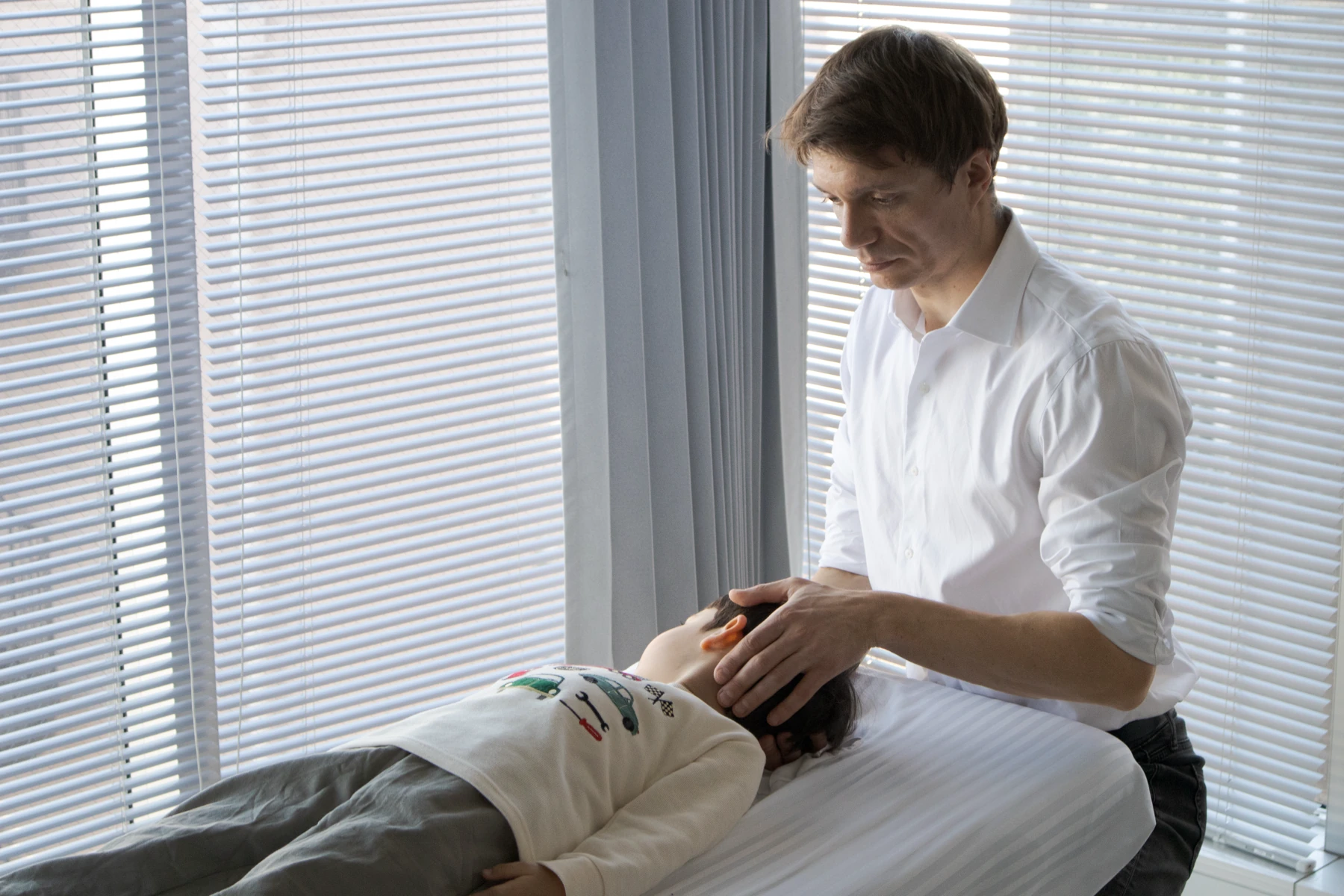
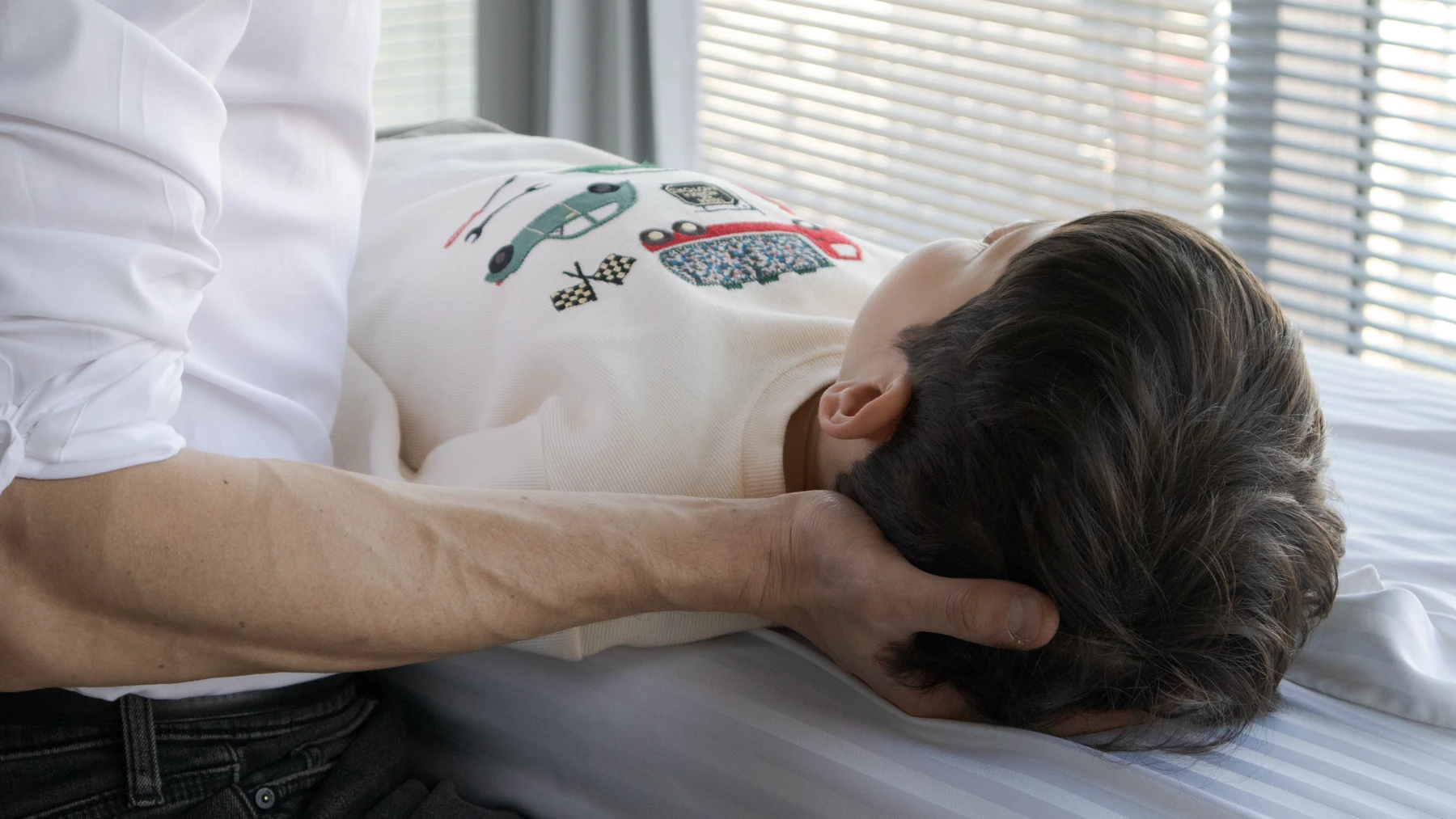
With babies and small children the contact is very light and very still — a hand under the head, a hand on the back. There is nothing to brace against. Babies often fall asleep on the table, and that is a good sign rather than a missed session.
What happens in a pregnancy session
Step 1
We talk first
How the pregnancy is going, or how the birth went, what your midwife or doctor has said, and what hurts and when. If something needs a doctor or a midwife rather than an osteopath, David will say so before anything else happens.
Step 2
How you are positioned
Later in pregnancy you will not be asked to lie flat on your front. David works with you on your side, propped and supported, or seated — whatever is comfortable that day. Nothing is held for long, and you can change position whenever you want to.
Step 3
Gentle hands-on work
The pelvis and lower back, the ribs and diaphragm, soft tissue, and craniosacral work where it helps. Everything is adapted to the stage you are at — and after birth, to how your recovery is actually going.
Step 4
Afterwards
You may feel looser straight away, or notice it over the next day or two. Some women come once or twice in a whole pregnancy, others monthly towards the end. David will tell you honestly whether another session is worth your money.
What happens in a session for a baby or child
Step 1
We talk first
The birth itself, feeding, sleep, and what you have noticed at home. Bring the maternity record book if you have it. If something needs a doctor or a pediatrician rather than an osteopath, David will say so before anything else happens.
Step 2
Where your child is
Babies are usually treated in a parent’s arms, or on the table right beside you, and you stay within reach throughout. Older children can bring something of their own. Nobody has to lie still, and nothing is done to a child who is not ready for it.
Step 3
Barely more than a resting hand
The contact is very light and very still — a hand under the head, a hand on the back. There is nothing to brace against. A baby gets the same three steps as any other patient, at a baby’s scale.
Step 4
Afterwards
Babies often feed and sleep differently that night; some are unsettled for a few hours first. Most families come back only occasionally, around growth stages, rather than on a course of treatment.
The same three steps, whatever your age
Babies, children, adults — David works in the same order every time.
First, space to move
Wherever the body has become stuck or crowded, it gets its room back. Nothing works properly while it is jammed, so this comes before anything else.
Then, back to the centre
Soft tissue that has been pulling every which way is drawn back towards the centre, so the parts move together instead of fighting one another.
Last, the old pattern goes
Through biodynamic osteopathy, the tissue lets go of the pattern it has been holding and takes up a better one. This is the slowest part, and the part David interferes with least.
What it reaches
Gentle, because gentle is what works here
Working this lightly with a pregnant body or a small child is not a lesser kind of osteopathy. It is the appropriate kind. Ligaments are softer in pregnancy and a baby’s joints are still forming, so force is not merely unnecessary — it would be the wrong tool.
Low back and pelvic pain, rib and diaphragm tension, sciatic pain, the aftermath of a long or difficult birth, a baby who cannot settle, a child aching through a growth spurt — David works with all of it here.
What people come in for
The three reasons families most often book this session.
During pregnancy
Low back, pelvic and hip pain, sciatica, rib and upper back tension, and the sleep that gets harder in the third trimester.
After birth
A pelvis that has not resettled, a back that aches from feeding and carrying, and the tiredness underneath all of it. Any time from around two weeks postpartum.
Babies and children
An unsettled baby, feeding well on one side only, a strong head preference or a flattening on one side, colic and reflux, and the aches and posture changes that come with growing.
What brings you in during pregnancy
The specific things women describe when the appointment is for pregnancy.
Low back and pelvis
The most common reason to come in. Pain as the pelvis loosens and your centre of gravity moves forward.
Pelvic girdle and pubic pain
Pain at the front of the pelvis or deep in the buttock, often worse on stairs or turning over in bed.
Sciatic pain
Pain running down the back of the leg as the pelvis and lower back change shape.
Ribs and diaphragm
Tightness under the ribs, and a shorter breath, as the baby grows and lifts the diaphragm.
Neck, shoulders and upper back
Strain from the changed posture, and from sleeping in positions you would not normally choose.
Heaviness and swelling
Work on circulation and mobility, for heavy legs and swollen ankles late in the day.
Sleep in the third trimester
Finding positions that let you rest, once lying down has stopped being comfortable.
Preparing for birth
Mobility through the pelvis and lower back, so the body has room to do what it needs to do.
What brings a baby or child in
The specific things parents describe when the appointment is for a baby or a small child.
Restlessness and broken sleep
Sleep that breaks night after night is often physical rather than behavioural.
Feeding and latching
Difficulty latching, or feeding well on one side only, is often mechanical tension rather than a feeding failure.
Crying that will not settle
A body held in discomfort cannot relax. Tension carried from birth keeps it on alert.
Reflux and digestion
Colic, reflux and wind. What drives them often sits higher up than the gut itself.
Head shape and preferred side
A flat spot, a head tilt, or a baby who always turns to the same side.
Tummy time refusal
If it is uncomfortable, a baby refuses it. There are gentler ways to build the same strength.
Settling and comfort
Positions and holds that help a distressed baby let go — and that you can use at home.
Growing pains and coordination
Posture, growing pains and coordination as a child gets older.
Which session should you book?
This one
Book here if you are pregnant, recently gave birth, or the appointment is for a baby or a child. It is booked as a 60-minute holistic osteopathy session — the same appointment, with the time and the approach adapted to you.
Bring your maternity record book, or anything your midwife or doctor has given you, if you have it to hand.
Something else
For anything outside pregnancy and childhood, book a standard session. Same hands, same clinic — the assessment simply starts from a different place.
Please note
This treatment is not a substitute for urgent medical care. If you have severe or sudden symptoms, please seek medical advice promptly. David is an osteopath: he works with his hands only, helping the body rebalance and draw on its own capacity to heal. He makes a functional diagnosis, not a medical one, and he does not prescribe or carry out medical procedures such as surgery. If something needs a doctor, he will say so.
What patients say


Book a pediatric or pregnancy session
The same price for every treatment.Japanese health insurance · TRICARE¥15,000 / sessionReduced rate, not billed to insurance. Show your Japanese insurance card or TRICARE ID at your visit.Standard¥20,000 / sessionReceipt and treatment documents provided for your private insurance claim.3-session package¥15,000 / session¥45,000 for three sessions.Booked as a 60-minute holistic osteopathy appointment. Choose your clinic below.
Ebisu, Tokyo
Monday – Thursday & Saturday
Pediatric and Pregnancy
A quiet room in Ebisu, a short walk from the station. There is room for a pram, and you are welcome to bring your partner.
Yokosuka
Fridays
Pediatric and Pregnancy
The same session, on a Friday. Second floor, stairs only — worth knowing if you are coming with a pram.
Not sure whether to book?
Tell David how far along you are, or what you have noticed in your baby, and he will say honestly whether this is the right time to come in — in English, Japanese or French.