A Sciatica Treatment Example That Restores Movement
Pain that starts in the lower back or buttock and travels down the leg can change the way you sit, walk, sleep, and work. A sciatica treatment example is most useful when it shows more than a single technique: it should explain how care is adapted to the person, the likely driver of symptoms, and the activities they need to return to.
Sciatica is not simply a tight muscle or a problem that can be treated with one adjustment. It describes irritation or compression affecting the sciatic nerve pathway, often causing pain, tingling, numbness, burning, or weakness in one leg. The source can involve the lumbar spine, a disc, the joints of the pelvis, surrounding muscles, or several contributing factors at once.
A sciatica treatment example in practice
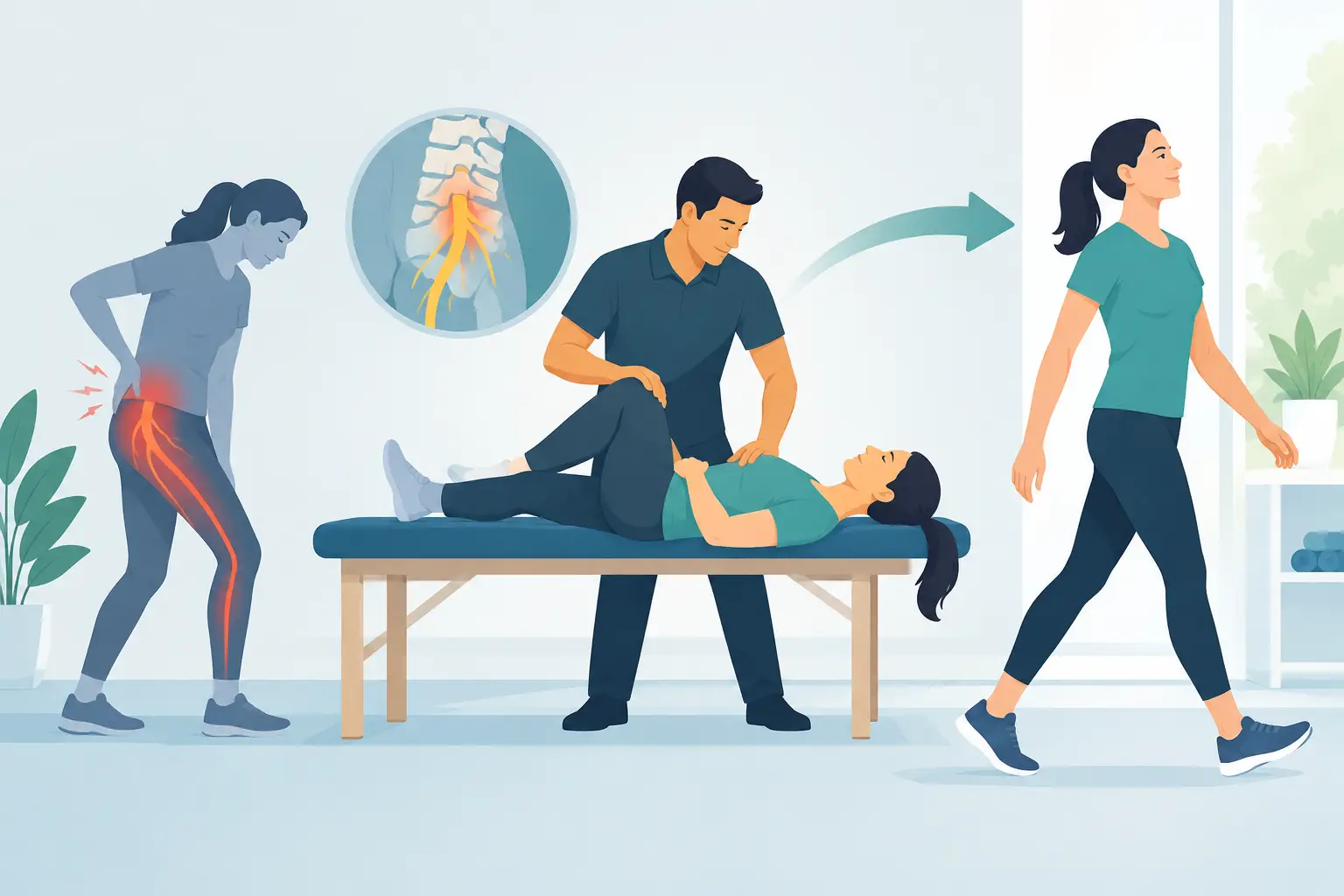
Consider a 42-year-old office professional in Tokyo who develops a sharp ache in the right buttock after a long flight and a demanding week at work. Within several days, the discomfort begins to travel down the back of the thigh toward the calf. Sitting in meetings becomes difficult, bending to put on shoes is painful, and sleep is interrupted when changing position.
This person may reasonably want immediate relief. Yet the first priority is not to apply a standard treatment sequence. It is to establish whether the symptoms appear consistent with uncomplicated sciatic irritation and whether hands-on care is appropriate at that point.
At Osteopath Tokyo, an initial consultation would begin with a detailed conversation. When did the pain begin? Was there a specific lift, fall, training session, or prolonged period of sitting? Does coughing or sneezing increase symptoms? Is the leg weak, numb, or giving way? The answers help shape both the examination and the care plan.
Step one: a careful assessment
Assessment considers the whole pattern, not only the painful area. The osteopath may observe how the patient stands, walks, bends, and moves from sitting to standing. Gentle testing can assess lumbar movement, hip mobility, pelvic mechanics, muscle tension, and the way symptoms respond to particular positions.
Neurological screening also matters. Changes in reflexes, sensation, or strength may suggest that a medical evaluation should take priority. Imaging is not required for every case of sciatica, but it may be appropriate when symptoms are severe, persist despite conservative care, or raise concern for a more significant spinal condition.
In this example, the patient has no meaningful loss of strength and no concerning neurological signs. The examination finds limited movement through the lower back, guarded right hip rotation, and significant tension in the deep gluteal muscles and lower back. Sitting flexion increases symptoms, while a brief walk and gentle extension reduce them slightly.
That pattern does not prove one single cause. It does, however, provide a practical starting point: reduce irritation, improve movement options, and avoid repeatedly provoking the nerve.
The first treatment: calm symptoms without forcing movement
Early treatment is generally gentle and responsive. When a nerve is irritated, pushing aggressively into painful stretches or forceful manipulation can make a sensitive system more reactive. The aim is to help the body move more comfortably, not to test how much pain a patient can tolerate.
For this patient, hands-on care may include soft-tissue treatment to the lumbar muscles, gluteal region, hip flexors, and tissues around the pelvis. Gentle joint mobilization can be used where restricted spinal or pelvic movement appears relevant. Depending on the findings and the patient’s comfort, osteopathic techniques may also address the rib cage, diaphragm, and upper back, particularly when sustained stress and shallow breathing are adding to global tension.
The patient may feel looser immediately after treatment, but immediate change is not the sole measure of success. Some people notice less pain during walking but remain sore after sitting. Others improve gradually over the next 24 to 48 hours. A well-paced first session should leave the patient feeling supported, informed, and clear about what to do next.
Movement advice between visits
In this scenario, the most useful advice is usually specific rather than restrictive. The patient is encouraged to take short, frequent walks instead of remaining seated for long stretches. A small lumbar support, a standing break during calls, and changing positions before symptoms build can reduce daily aggravation.
Home movement may include a gentle, pain-limited spinal exercise and an easy hip mobility drill. If either movement sends symptoms farther down the leg, increases numbness, or causes a sharp flare that lasts, it should be stopped and reviewed. The right exercise is the one that is tolerable, repeatable, and appropriate for that person’s presentation, not the most challenging one.
Sleep positioning can also make a difference. Some patients are more comfortable on their side with a pillow between the knees; others prefer lying on their back with support beneath the knees. There is no universal best position. The practical goal is a position that allows the nervous system to settle and the patient to rest.
How the plan changes as symptoms improve
After several days, our example patient reports that calf symptoms occur less often and walking feels easier, but prolonged desk work still causes buttock pain. This is a useful shift. Symptoms that centralize, meaning they move out of the lower leg and closer to the back or buttock, can be a positive sign in some presentations. It still needs to be interpreted alongside function, comfort, and the overall examination.
The second phase of care can place more emphasis on restoring confidence in normal movement. Treatment may continue to address restrictions in the lower back, pelvis, and hips while introducing controlled strengthening for the glutes and trunk. The patient might practice a supported hip hinge, a low-load bridge, or a carefully chosen core-control exercise. Form matters, but so does dosage. Doing too much too soon can reignite symptoms even when the exercise itself is appropriate.
Ergonomics are addressed in practical terms. A perfect desk setup will not compensate for eight uninterrupted hours of sitting. For many professionals, regular movement breaks, an adjustable screen height, and a chair that supports a neutral, relaxed position are more valuable than an expensive workstation change alone.
For active patients, return to training is similarly gradual. Running, tennis, golf, or strength work may be reintroduced once everyday movements are reliably comfortable. The order depends on the sport and the person. An athlete preparing for an event has different demands than a new parent trying to lift a baby without pain, but both benefit from a plan built around meaningful function.
When sciatica needs urgent medical attention
Most cases of radiating leg pain can be assessed calmly, but certain symptoms require urgent medical care rather than waiting for a manual therapy appointment. Seek immediate assessment for new difficulty controlling bladder or bowel function, numbness around the groin or inner thighs, rapidly worsening leg weakness, or severe symptoms after significant trauma.
Persistent fever, unexplained weight loss, a history of cancer, or pain that is severe and unrelenting at night also deserves prompt medical review. These signs do not automatically mean a serious condition is present, but they should not be managed as routine sciatica.
What a realistic recovery can look like
Recovery rarely follows a straight line. A patient may feel significantly better for several days, then experience a brief flare after a long commute, poor sleep, or an unaccustomed workout. That does not necessarily mean the original problem has returned. It may mean the body exceeded its current capacity and needs a temporary adjustment in activity.
The frequency of care depends on symptom severity, examination findings, response to treatment, and the patient’s goals. Acute pain may benefit from closer support initially, followed by wider intervals as movement and confidence return. Chronic or recurring symptoms often need a broader look at work habits, stress load, prior injuries, exercise patterns, and recovery time.
The value of individualized osteopathic care lies in that ongoing reassessment. Treatment should evolve as symptoms evolve, with clear communication about what is improving, what still triggers pain, and whether another medical opinion is needed. The most helpful next step is often a thorough assessment that gives you a plan you can understand and use in everyday life.