
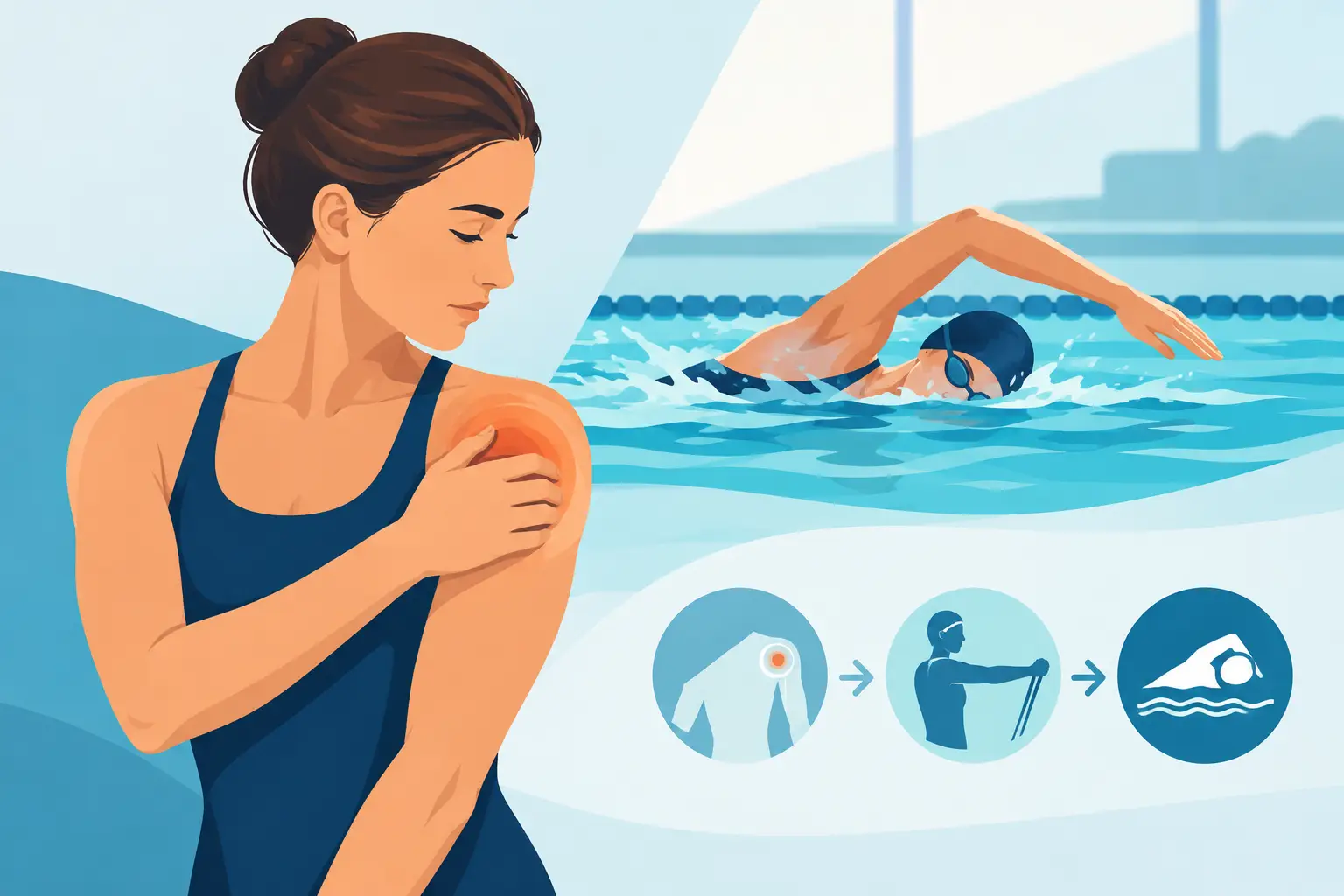
Swimmer Shoulder Recovery and Return to Training
The pain often starts quietly: a pinch during the catch, a tired ache after a long set, or discomfort when reaching for a bag overhead. Then it begins to affect sleep, work, and confidence in the water. Effective swimmer shoulder recovery is not simply about taking a few days away from the pool. It means understanding why the shoulder became overloaded, settling irritation, and rebuilding the control needed for repeated strokes.
For recreational swimmers, triathletes, competitive athletes, and masters swimmers, shoulder symptoms can be especially frustrating. Swimming may be an important outlet in a demanding Tokyo workweek, part of a race plan, or a sport that has always felt good for the body. A clear, individualized recovery plan helps protect that relationship with the water rather than turning every session into a test of pain tolerance.
Why swimmers develop shoulder pain
The shoulder is designed for movement, but it relies on precise coordination. In freestyle, backstroke, butterfly, and even breaststroke, the arm repeatedly moves overhead while the shoulder blade, rib cage, neck, and upper back must provide a stable base. A small change in timing or mobility can become significant when repeated hundreds or thousands of times in a session.
The phrase “swimmer’s shoulder” is often used broadly. It can describe rotator cuff irritation, biceps tendon pain, impingement-related symptoms, shoulder instability, bursitis, or pain referred from the neck and upper back. The exact source matters because recovery is different for a stiff, compressed shoulder than for a highly mobile shoulder that lacks control.
Training errors are common contributors. A sudden increase in distance, more paddles, a new strength program, frequent butterfly, or insufficient recovery between hard sessions can exceed the shoulder’s current capacity. Technique also matters. Crossing the hand over the center line, dropping the elbow during the pull, poor body rotation, or breathing patterns that repeatedly strain one side can all add load.
However, the shoulder is rarely the whole story. Restricted upper-back rotation, rib stiffness, a forward-head posture after long hours at a desk, reduced hip rotation, and fatigue can change how force travels through the stroke. This is why a whole-body assessment is often more useful than treating the painful area alone.
The first phase of swimmer shoulder recovery: calm the irritation
Pain is useful information, but it does not always mean that all movement must stop. Complete rest can be appropriate after an acute injury or when pain is severe, but extended rest without a plan may leave the shoulder weaker and more sensitive when swimming resumes. The right approach depends on the nature and severity of symptoms.
For a mild overuse flare, temporarily reduce the movements that provoke pain. This may mean shortening sessions, avoiding paddles and sprint work, limiting butterfly, or using kick sets with care if holding a board irritates the shoulder. Some swimmers tolerate easy backstroke or modified freestyle; others need a brief break from the pool. The goal is to keep symptoms from escalating, not to push through sharp pain.
Outside the pool, avoid repeatedly testing a sore shoulder with heavy overhead lifting or aggressive stretching. Gentle movement is usually preferable to forcing range of motion. A shoulder that feels pinched at the front may not benefit from being pulled harder into the same painful position.
Cold or heat can be used for comfort, depending on what feels better, but neither replaces load management. If pain is worsening, wakes you at night, follows a fall or dislocation, causes marked weakness, numbness, or loss of sensation, seek prompt medical assessment. These signs deserve more than self-management.
Restore the movement that supports the stroke
Once the acute irritation begins to settle, recovery should focus on the foundations of efficient overhead movement. This is where an individualized evaluation can make a meaningful difference.
A practitioner may assess how the shoulder blade moves during arm elevation, whether the thoracic spine can extend and rotate, how the ribs move with breathing, and whether the neck is contributing to the symptoms. In swimmers, one-sided breathing habits, previous injuries, and the demands of daily posture often reveal patterns that are not obvious in the pool.
Manual therapy can be helpful when joint restriction, muscular guarding, or soft-tissue tension is limiting comfortable movement. Osteopathic treatment may include gentle structural techniques, soft-tissue work, and approaches that address the upper back, ribs, neck, and shoulder as an integrated system. The purpose is not simply to create a temporary feeling of looseness. It is to improve the conditions in which the shoulder can regain reliable movement and strength.
At Osteopath Tokyo, care is adapted to the individual swimmer, including training history, stroke demands, prior injuries, and current pain behavior. For an athlete preparing for a race, the plan may prioritize maintaining safe conditioning. For someone whose symptoms have built up over months of desk work and casual swimming, restoring posture, mobility, and tolerance may take precedence.
Build capacity, not just flexibility
Many swimmers already have plenty of shoulder range of motion. Their challenge is often controlling that range under fatigue. Recovery exercises should therefore be selected carefully rather than copied from a generic shoulder routine.
Early work may include low-load rotator cuff activation, shoulder blade control, and thoracic mobility exercises that can be performed without aggravating pain. As tolerance improves, the program should progress toward resistance work that reflects swimming demands: controlled pulling patterns, endurance for the muscles around the shoulder blade, and gradual overhead loading.
The body also needs a stable base. Strength and coordination in the trunk, hips, and legs help reduce the tendency to pull excessively with the arms. This is particularly relevant for triathletes, who may arrive in the pool with fatigue from cycling or running, and for swimmers returning after time away from training.
Progression should be based on response, not just on a calendar. Mild muscular fatigue after exercise can be normal. Increasing pain during the session, pain that lingers strongly into the next day, or a worsening loss of motion suggests the load was too high. A useful recovery plan adjusts before a small flare becomes another forced break.
Return to swimming with a measured plan
A pain-free day does not automatically mean the shoulder is ready for normal volume. Returning too quickly is one of the most common reasons symptoms recur. Start with shorter, easier sessions and leave enough recovery time to see how the shoulder responds.
Technique should be part of the return-to-swim process. A skilled swim coach can assess stroke mechanics, while hands-on care can address physical restrictions and control deficits. These roles complement each other. If breathing to one side consistently causes neck or shoulder strain, temporarily alternating breathing sides or adjusting the pattern may reduce asymmetrical load, provided it feels safe and natural.
Avoid adding every challenge at once. Do not reintroduce distance, speed, paddles, pull buoy work, and strength training in the same week. Bring back one variable at a time. For example, establish comfortable easy freestyle volume before adding intervals, then assess whether paddles are truly necessary for your goals.
A gradual return can feel slow, especially for dedicated athletes. Yet it usually preserves more training over a season than cycling between hard sessions and painful setbacks. The target is not merely to complete the next workout. It is to restore a shoulder that can tolerate consistent training.
When a professional assessment is worthwhile
Consider a professional assessment when shoulder pain persists beyond a short reduction in training, repeatedly returns when you resume swimming, limits sleep or daily activities, or is accompanied by neck pain, tingling, weakness, or a sense that the shoulder may slip out of place. Swimmers who have tried rest and stretching without lasting improvement can also benefit from a more detailed look at the contributing factors.
The assessment should account for the whole picture: current pool volume, stroke preferences, dryland training, work posture, old injuries, and recovery habits. There is no single corrective exercise or treatment that suits every swimmer. A precise plan is safer and more effective than repeatedly trying to train through uncertainty.
Your shoulder does not need to be treated as fragile. With the right balance of symptom relief, movement restoration, strength, and sensible progression, many swimmers can return to the water with better awareness of what their body needs and greater confidence in every stroke.