
Best Pillows for Neck Pain: A Clinician’s Guide
A pillow can either support a recovering neck or quietly aggravate it for seven hours each night. For people waking with stiffness, headaches, shoulder tension, or pain when turning the head, finding the best pillows for neck pain is less about buying the most expensive option and more about maintaining a neutral, comfortable position throughout sleep.
The right choice is personal. Your preferred sleep position, shoulder width, mattress firmness, injury history, and the source of your symptoms all matter. A pillow that gives one person immediate relief can leave another with more tension by morning.
What a Neck-Supportive Pillow Should Do
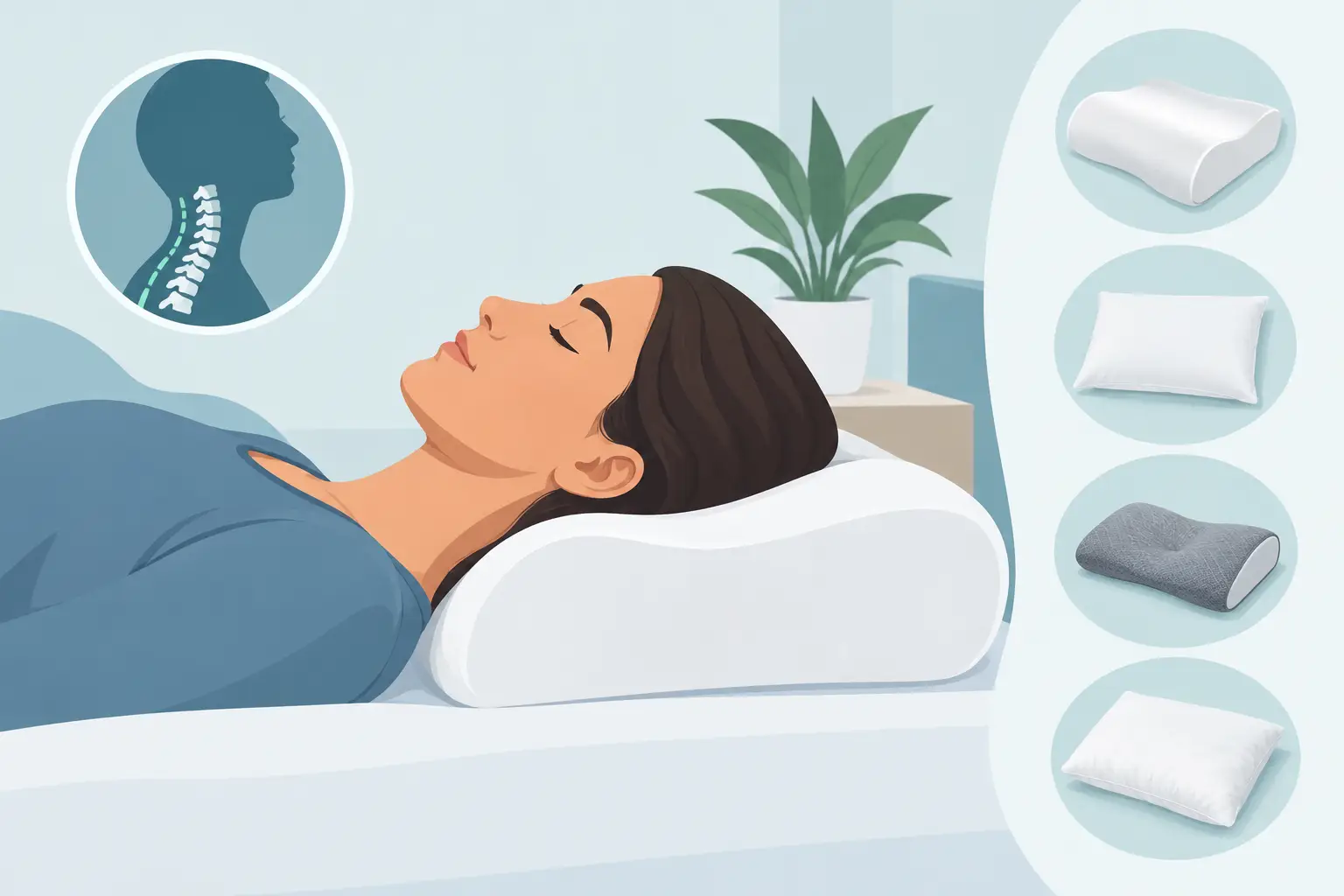
Your neck, or cervical spine, has a gentle natural curve. A useful pillow supports that curve without pushing the head too far forward, allowing it to fall backward, or tilting it sideways. The goal is not to force perfect posture. It is to give the muscles, joints, and connective tissues enough support to rest rather than work all night.
When a pillow is too high, the chin may be pushed toward the chest. This often contributes to tightness at the base of the skull, tension headaches, and discomfort between the shoulder blades. When it is too low, the neck can bend backward or sideways, particularly for side sleepers. Both positions may leave you feeling as though you need to stretch, crack, or massage your neck as soon as you wake.
Material matters, but height and shape usually matter more. A well-designed pillow should feel supportive without being rigid and should maintain its shape long enough to keep your head and neck aligned.
The Best Pillows for Neck Pain by Sleep Position
Side sleepers: supportive height is essential
Side sleeping is often comfortable for the neck when the pillow fills the space between the ear and the outside shoulder. That space varies significantly from person to person. Someone with broad shoulders or a firm mattress will usually need a higher loft than someone with narrow shoulders or a softer mattress.
A medium-firm adjustable-fill pillow can work well because the height can be refined gradually. Contoured cervical pillows, with a raised edge and a lower central area, may also help some side sleepers maintain alignment. However, the contour must suit your body dimensions. A fixed contour that is too high can create more strain than a conventional pillow.
Place the lower arm in front of you or around a body pillow rather than under your head. Sleeping directly on the arm can compress the shoulder and encourage the neck to bend toward it. A small pillow held against the chest can also reduce the tendency for the upper shoulder to roll forward.
Back sleepers: support the curve, not just the head
For back sleepers, the most useful pillow is often lower than expected. The head should not be pushed forward. Ideally, the neck receives gentle support while the back of the head rests comfortably without pressure.
Cervical contour pillows can be helpful in this position. Their lower center cradles the head, while the raised section supports the neck. A pillow with adjustable filling is another sensible option, especially if you sometimes sleep on your back and sometimes turn to your side.
A small rolled towel placed inside the pillowcase, under the neck rather than the head, can be a short-term way to test whether added cervical support feels beneficial. If it increases pain, causes tingling, or makes it difficult to relax, remove it. More support is not always better.
Stomach sleepers: reduce rotation where possible
Stomach sleeping usually places the neck in prolonged rotation because the head must turn to breathe. Even an excellent pillow cannot fully remove this issue. For people with recurring neck pain, headaches, jaw tension, or arm symptoms, gradually moving toward side or back sleeping can make a meaningful difference.
If you cannot sleep any other way, choose a very thin pillow or consider resting with your forehead supported near the edge of a pillow in a way that allows less head rotation. Avoid thick, lofty pillows. They increase extension and twisting through the neck.
Changing sleep position can take time. Supporting the body with pillows at the front and back may make side sleeping feel more secure while you adapt.
Choosing a Pillow Material
There is no single best material for everyone. The feel of the pillow and its ability to hold an appropriate shape should guide the decision.
Memory foam provides consistent contouring and can be useful for people who need stable support. Some find it too firm, too warm, or restrictive when changing positions. Latex tends to be responsive, durable, and supportive, although it may feel bouncy or too dense for lighter sleepers.
Adjustable shredded foam, latex, or fiber-fill pillows are practical because you can remove or add filling until the height feels right. This is especially valuable when neck pain is recent or when you are unsure of your ideal loft. Down and down-alternative pillows can feel soft and comfortable, but they may compress too much during the night unless they are regularly fluffed or designed with a supportive inner core.
For sensitive sleepers, consider temperature, odor, allergies, and ease of cleaning. A pillow that technically supports your neck but disrupts sleep because it feels hot or uncomfortable is not the right pillow for you.
How to Tell Whether Your Current Pillow Is the Problem
Your pillow may be contributing if pain is consistently worse in the morning and eases as you move through the day. Other clues include frequent waking to reposition your head, waking with one-sided neck tightness, or noticing that your pillow is visibly flattened, lumpy, or no longer returns to shape.
A simple alignment check can help. When lying on your side, ask someone to look from behind or take a photograph. Your nose should generally remain in line with the center of your chest rather than pointing markedly up toward the ceiling or down toward the mattress. When lying on your back, your face should point upward without your chin being pressed toward your chest.
Give a new pillow a fair trial, but not an endless one. A few nights of adjustment can be normal, particularly when moving from a very soft or worn pillow to a more supportive design. If discomfort is clearly worse after one to two weeks, the loft, shape, or firmness is likely not appropriate.
Why a Pillow May Not Solve Neck Pain Alone
A pillow is one part of the picture. Neck discomfort can also come from prolonged desk work, stress-related muscle tension, limited upper-back mobility, a previous injury, jaw clenching, or shoulder dysfunction. In these cases, replacing the pillow may reduce overnight irritation without addressing the reason the area became sensitive in the first place.
Your mattress also affects pillow choice. A softer mattress lets the shoulder sink deeper for side sleepers, often requiring a lower pillow. A firmer mattress keeps the shoulder higher and may require more loft. This is why a pillow that felt ideal in a store can feel entirely different at home.
Daily habits matter as well. If you spend long periods looking down at a phone, working from a laptop without proper screen height, or carrying tension in your shoulders, the neck may arrive at bedtime already overloaded. Gentle movement, regular breaks, and an ergonomic workspace can complement better sleep support.
When to Seek a Professional Assessment
Neck pain that persists, repeatedly returns, or interferes with sleep deserves a more individualized assessment. At Osteopath Tokyo, care begins by looking beyond the painful area. The neck is assessed alongside the jaw, shoulders, upper back, posture, breathing patterns, and relevant daily demands. Treatment may include gentle hands-on work, soft-tissue techniques, mobility work, and practical guidance for sleep and workstation setup.
Seek prompt medical evaluation if neck pain follows significant trauma or occurs with symptoms such as:
- numbness, weakness, or persistent tingling in an arm or hand
- severe or unusual headache, dizziness, fainting, or visual changes
- fever, unexplained weight loss, or feeling generally unwell
- loss of coordination, balance changes, or worsening pain that does not settle
These symptoms do not necessarily indicate a serious condition, but they should not be managed by changing a pillow alone.
The best pillow is one that helps you wake feeling less guarded, not one with the most impressive marketing. Start with your sleeping position, choose a shape and height that keep your neck neutral, and make small adjustments rather than searching for a miracle product. If pain continues to interrupt your rest, a careful assessment can help clarify what your neck needs beyond the bedroom.