How to Manage Tension Headaches Without Guesswork
A tension headache can make an ordinary Tokyo workday feel far longer than it is. The pressure may start at the base of the skull after hours at a laptop, settle across the forehead during a crowded commute, or arrive after a demanding week when you finally slow down. Learning how to manage tension headaches begins with recognizing that the pain is real, even when the cause is not a single injury or obvious medical problem.
Tension headaches are often linked to a combination of muscular overload, sustained posture, jaw clenching, visual strain, poor sleep, dehydration, and stress. For many people, the most effective approach is not one quick fix but a personalized plan that reduces the factors keeping the headache cycle active.
What a tension headache commonly feels like
Tension headaches are typically described as a dull, steady ache or a feeling of pressure around both sides of the head. Some people describe a tight band across the forehead, while others feel pain in the temples, neck, shoulders, or behind the eyes. The scalp may feel tender, and neck movement can feel restricted.
Unlike many migraines, tension headaches are less likely to cause nausea, vomiting, or strong sensitivity to light and sound. However, symptoms can overlap. A person can also experience both migraine and tension-type headaches, which is one reason an individual assessment matters when headaches are frequent or changing.
The neck and jaw are often involved. Long periods with the head held forward, such as looking down at a phone or leaning toward a screen, can overload the small muscles at the base of the skull. Clenching the jaw during concentrated work, exercise, or sleep can add further strain through the temples, face, and upper neck.
How to manage tension headaches in the moment
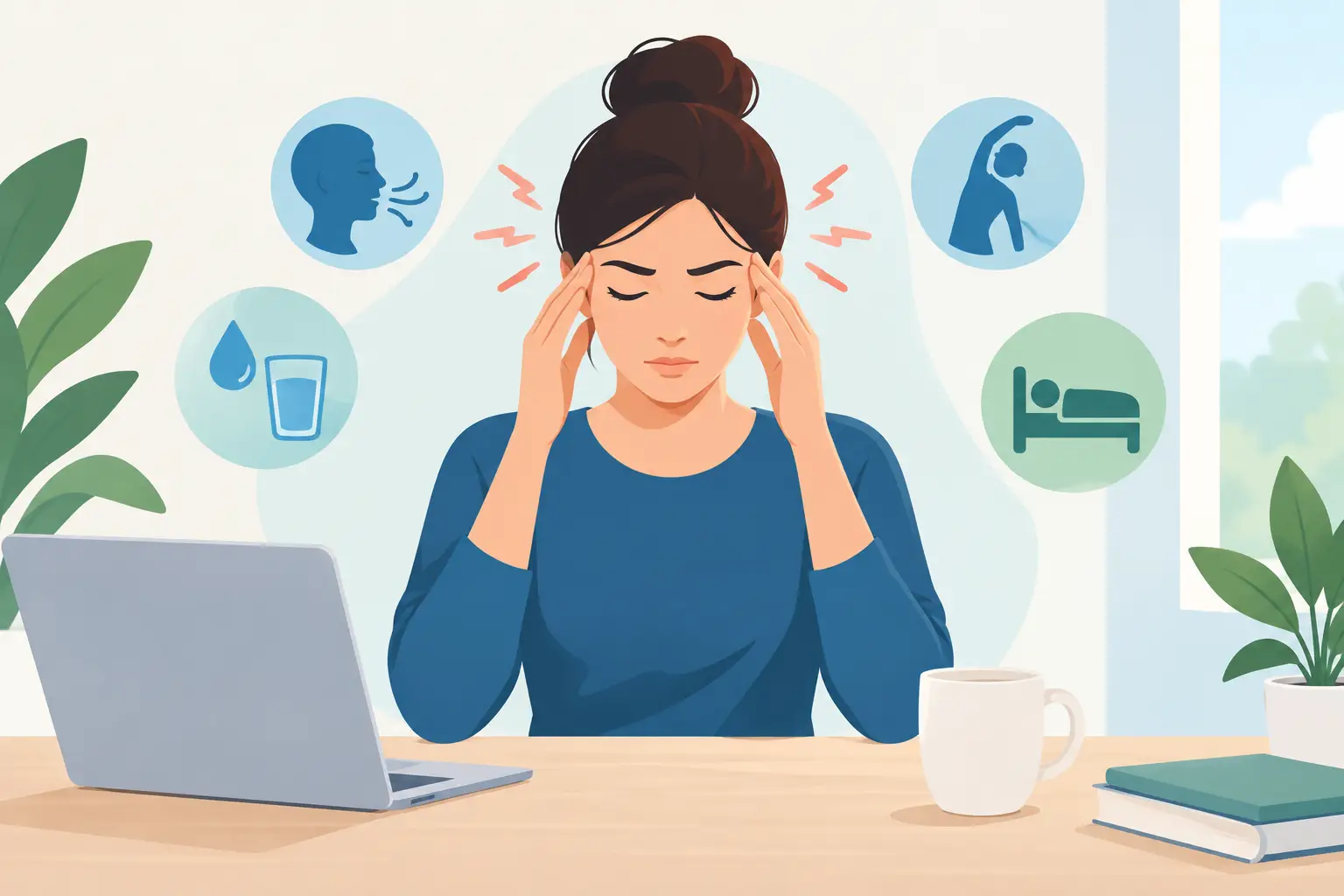
When a headache begins, the goal is to calm the irritated system rather than push through it. If possible, step away from your screen for a few minutes and move to a quieter, dimmer environment. Slow breathing can help reduce the unconscious bracing that often builds in the shoulders, jaw, and chest.
Try a gentle reset: let your shoulders drop, place your tongue lightly behind your upper front teeth, and allow a small space between your teeth. Then take several slower breaths, making the exhale slightly longer than the inhale. This will not resolve every headache, but it can interrupt a pattern of clenching and shallow breathing.
A warm compress over the upper neck and shoulders may ease muscle guarding. Some people prefer a cool pack over the forehead or eyes. Use whichever feels more relieving, with a cloth barrier between the pack and skin. Gentle neck movement can also be useful, but avoid forceful stretching or trying to crack your own neck when you are in pain.
Hydration and food are worth considering, especially after travel, exercise, alcohol, or a busy day of meetings. Missing meals and relying heavily on caffeine can make headaches more likely in some people. Caffeine may provide short-term relief for others, but frequent use can contribute to rebound headaches or withdrawal symptoms. The answer depends on your usual intake and pattern of pain.
Over-the-counter pain medication may be appropriate for occasional headaches when used as directed by a pharmacist or physician. It should not become the main strategy for recurring symptoms. Needing medication repeatedly is a useful signal to look more closely at the causes and seek professional advice.
Look beyond posture alone
Posture matters, but it is not about holding yourself rigidly upright all day. A perfectly positioned workstation will not protect you if you remain still for six hours, sleep poorly, and clench your teeth through every deadline. The body generally tolerates a range of positions better when it can move regularly.
Set your screen so you are not continually looking down, and keep frequently used items within easy reach. If you work from a laptop, a separate keyboard and a raised screen can reduce the tendency to fold forward. More importantly, build short movement breaks into the day. Standing, walking to refill water, rolling the shoulders, or looking into the distance for one or two minutes can reduce cumulative strain.
Visual effort is another overlooked trigger. If headaches appear after reading, video calls, or detailed screen work, consider whether screen brightness, glare, uncorrected vision, or prolonged close focus may be contributing. An eye examination may be appropriate if this is a recurring pattern.
Pay attention to the jaw, sleep, and stress load
Many tension headaches are maintained by tension that occurs outside conscious awareness. You may not notice that your teeth are together while answering emails, driving, or lifting weights. Morning jaw soreness, tooth wear, facial fatigue, clicking, or headaches on waking can suggest nighttime clenching or grinding.
Stress does not mean the headache is “all in your head.” It means the nervous system may be spending too much time in a guarded state. Muscles tighten, sleep becomes lighter, breathing becomes shallower, and recovery becomes less complete. A demanding job, family responsibilities, relocation, and long commutes can all affect this system.
Small, repeatable changes are often more useful than ambitious routines that disappear after a week. A consistent bedtime, a brief walk after work, regular meals, and a phone-free wind-down period can improve recovery. If jaw clenching is prominent, a dentist can assess dental factors and discuss whether a night guard is suitable.
When hands-on assessment may help
If your headaches recur, it can be helpful to assess the entire pattern rather than treating only the head. A skilled osteopathic evaluation may examine neck mobility, upper back and rib movement, shoulder tension, jaw mechanics, breathing patterns, and the way your body responds to work, sport, sleep, and stress.
Hands-on treatment may include gentle work for tight soft tissues, restricted joints, the jaw, and the base of the skull. Depending on your presentation, treatment can also incorporate craniosacral or biodynamic approaches intended to support relaxation and reduce strain. The approach should be comfortable, adapted to your history, and paired with practical advice you can use between visits.
At Osteopath Tokyo, care is individualized rather than based on a fixed protocol. For one person, the key issue may be a stiff upper back and poor desk setup. For another, it may be persistent jaw tension after a stressful period, a training-related neck strain, or disrupted sleep. The aim is to understand what is driving your particular pattern and create a realistic path toward fewer, less intense headaches.
Keep a simple headache pattern record
A detailed diary is not necessary, but a short record can reveal useful connections. For two to three weeks, note when a headache starts, where you feel it, how long it lasts, what you were doing beforehand, your sleep quality, meals, stress level, exercise, and any medication taken.
This information can help distinguish occasional tension headaches from a more persistent issue. It also gives your healthcare professional a clearer picture than trying to recall several months of symptoms during an appointment. Look for patterns, not perfection. A headache that appears every Sunday evening, after long video calls, or following hard training carries useful clues.
Know when a headache needs urgent medical attention
Most tension headaches are not dangerous, but a new or unusual headache should never be dismissed automatically. Seek urgent medical evaluation for a sudden, severe headache that reaches maximum intensity quickly, especially if it is unlike anything you have experienced before.
Also seek prompt care if headache is accompanied by weakness, numbness, confusion, fainting, difficulty speaking, vision loss, seizure, fever with a stiff neck, persistent vomiting, chest pain, or symptoms after a significant head injury. New headaches during pregnancy or postpartum, headaches that worsen steadily, and headaches beginning after age 50 also deserve medical assessment. If you have a history of cancer, immune suppression, or high blood pressure, discuss new or changing headaches with a physician.
Recurring headaches can be exhausting, but they are not something you simply have to accept as the cost of a busy life. Careful attention to movement, recovery, jaw tension, and your individual triggers can create meaningful change, especially when supported by a thoughtful hands-on assessment.