Best Treatments for Tennis Elbow That Work
A painful grip on a coffee cup, a sharp pull while lifting a suitcase, or an ache after a long day at the computer can all point to tennis elbow. Despite the name, many people with this condition have never picked up a racket. The best treatments for tennis elbow usually combine thoughtful activity changes, progressively stronger tendons, and hands-on care tailored to the way your body is moving and working.
What Tennis Elbow Really Means
Tennis elbow, also called lateral elbow tendinopathy, involves pain around the bony prominence on the outside of the elbow. The wrist extensor tendons attach here. These tissues help stabilize the wrist when you grip, lift, type, use a mouse, cook, garden, or play sport.
It often develops when tendon capacity no longer matches demand. A sudden increase in tennis, golf, weight training, manual work, or repetitive computer use can trigger symptoms. Sometimes there is no single obvious cause. Stiffness through the neck, shoulder, forearm, and wrist can also change how force travels into the elbow.
Pain can be frustrating because it may persist long after the original irritation. That does not necessarily mean the tendon is seriously damaged. It does mean that simply resting until the pain disappears is rarely the complete answer.
Best Treatments for Tennis Elbow: Start With the Load
The most effective plan is not usually one treatment performed once. It is a measured process of reducing aggravation, restoring comfortable movement, and rebuilding the tendon’s tolerance to daily and sporting demands.
Modify painful activities without becoming inactive
For the first stage, identify the movements that reliably provoke symptoms. Common examples are heavy gripping, lifting with the palm down, repetitive screwdriver motions, backhand strokes, and long periods of mouse use. Temporarily reducing the volume, force, or frequency of these activities can calm an irritated tendon.
This is different from avoiding all use of the arm. Complete rest may make the arm feel weaker and more sensitive when activity resumes. Instead, keep moving within a tolerable range. You may need to hold objects closer to the body, use two hands for heavier items, take brief work breaks, or adjust your desk setup.
Pain during rehabilitation is not always a sign to stop. Mild discomfort that settles within a reasonable time can be acceptable. Sharp pain, escalating symptoms, or pain that remains notably worse the following day usually means the load needs to be reduced.
Use progressive strengthening, not random exercises
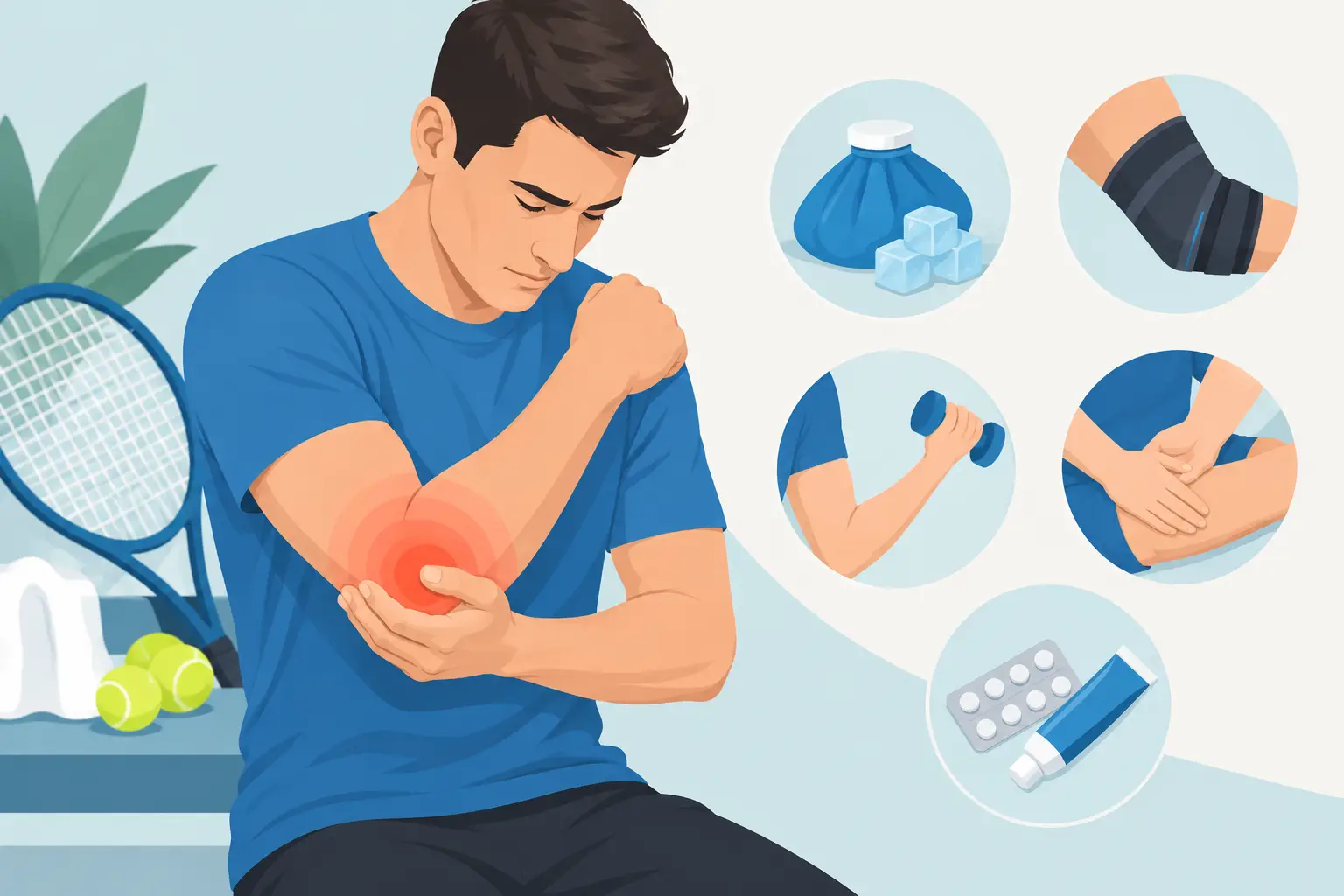
Targeted strengthening is central to long-term recovery. It helps the wrist and forearm muscles manage force more efficiently and gradually improves tendon capacity. A program may begin with isometric holds, where the muscle works without moving the wrist, before progressing to slow wrist extension exercises, grip training, and more functional lifting tasks.
The right starting point depends on pain level, strength, work demands, and goals. An avid tennis player needs a different progression from a professional who is struggling to use a laptop or a parent who finds lifting a child painful. Exercise should become gradually more demanding, not simply more numerous.
Technique matters. If the shoulder is collapsing forward, the wrist is overworking, or the neck is held rigidly throughout an exercise, the elbow may continue to compensate. A practitioner can help you find a version that strengthens the intended tissues without repeatedly provoking the pain.
Consider a counterforce strap or wrist support selectively
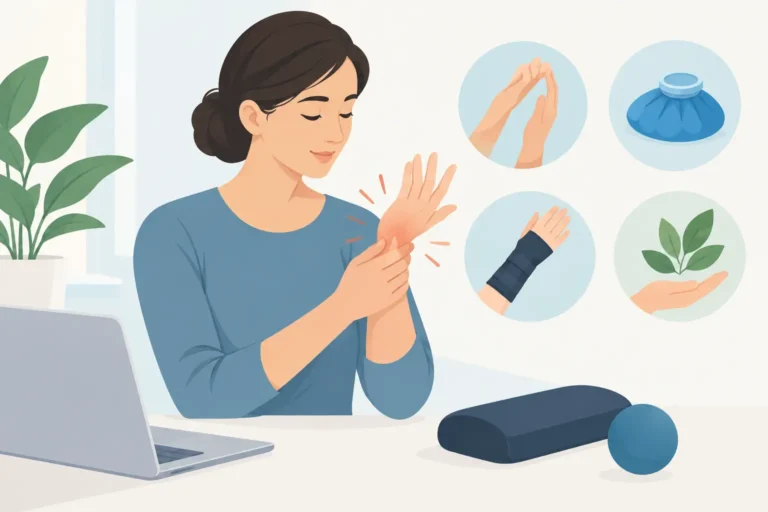
A tennis elbow strap worn around the upper forearm may reduce discomfort during certain activities by changing how force is distributed through the tendon. A wrist brace can sometimes be useful during a short, highly irritable phase or for a specific task.
These supports are tools, not cures. If a strap allows you to work or exercise with less pain, it can be helpful temporarily. It should not become a substitute for addressing workload, movement habits, and progressive strength. A support that causes tingling, pressure, or increased pain should be adjusted or discontinued.
Add hands-on treatment when movement is restricted
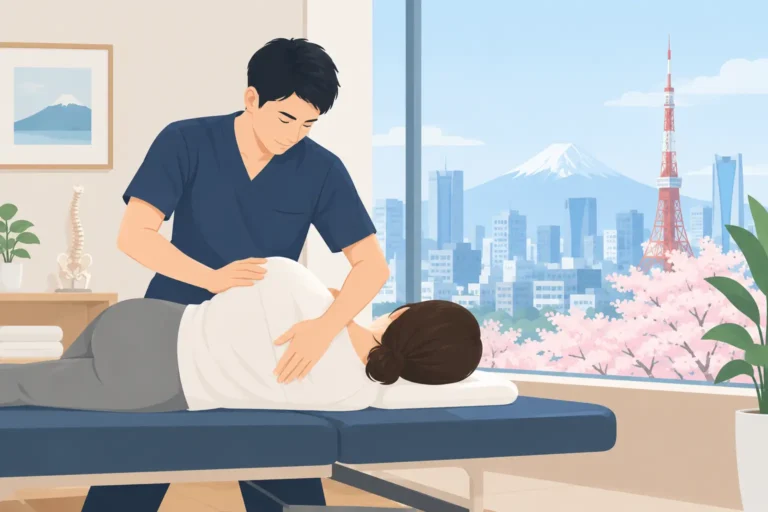
Manual treatment can be valuable when tennis elbow is accompanied by tightness or reduced mobility through the forearm, wrist, elbow, shoulder, upper back, or neck. Osteopathic care may include gentle joint mobilization, soft-tissue techniques, and a whole-body assessment of how you use the arm.
The aim is not to force a painful elbow into change. It is to reduce unnecessary strain, improve comfortable movement, and create better conditions for rehabilitation. For someone who spends long hours at a desk, this may include addressing shoulder and upper-back stiffness. For an athlete, it may include assessing grip mechanics, shoulder control, and the return to training.
At Osteopath Tokyo, care is individualized rather than based on a standard elbow protocol. Hands-on treatment is combined with practical guidance on pacing, ergonomics, and exercises that fit your current symptoms and goals.
Treatments That Require Careful Discussion
Pain medication, including anti-inflammatory medication, may provide short-term relief for some people. It can be appropriate when pain is limiting sleep or basic function, but it should be discussed with a physician or pharmacist, especially if you have stomach, kidney, heart, bleeding, or medication-related concerns. Pain relief can make activity easier, but it does not automatically restore tendon capacity.
Corticosteroid injections can reduce pain quickly in selected cases, particularly when symptoms are severe. However, the early benefit may not last, and repeated injections may not be the best option for long-term tendon health. A careful discussion of benefits, recurrence risk, and alternatives is worthwhile before proceeding.
Other injection treatments, such as platelet-rich plasma, are sometimes offered. Research findings remain mixed, and outcomes vary based on the individual, the technique used, and the duration of symptoms. Shockwave therapy may also help some persistent cases, though it is not a guaranteed solution. These options are generally most useful when they sit within a broader rehabilitation plan, not when they replace one.
Surgery is rarely needed. It may be considered after a sustained, well-managed course of conservative care has failed and the diagnosis has been carefully confirmed.
A Thorough Assessment Prevents Missed Causes
Not all outer-elbow pain is tennis elbow. Nerve irritation from the neck or forearm, joint problems, referred pain from the shoulder, and other tendon conditions can create similar symptoms. Numbness, tingling, marked weakness, widespread arm pain, or significant neck symptoms deserve particular attention.
A high-quality assessment should look beyond the tender spot on the elbow. It should consider your work setup, sport, recent changes in training, grip demands, sleep, previous injuries, and the mobility and control of the entire arm. This broader view is especially useful when symptoms keep returning after temporary relief.
When to Seek Medical Assessment Promptly
Arrange medical evaluation promptly if elbow pain follows a major fall or direct injury, if you cannot use the arm normally, or if there is visible deformity, severe swelling, redness, warmth, fever, or unexplained weight loss. New numbness, progressive weakness, or a loss of hand coordination also needs medical attention.
For more typical gradual-onset tennis elbow, consider an assessment if pain has not improved after several weeks of sensible load modification, if it is disrupting sleep or work, or if you are unsure which activities are safe. Early guidance can prevent the common cycle of resting completely, returning to full activity too quickly, and flaring up again.
Build a Return That Lasts
Recovery is rarely perfectly linear. You may have a good week followed by a flare after travel, a demanding work deadline, or an ambitious return to sport. Rather than seeing that as failure, use it as information about the current capacity of the arm.
As symptoms improve, reintroduce demanding tasks in small, planned increments. A tennis player might first tolerate gentle hitting, then shorter sessions, then more forceful serves. A desk worker may build tolerance with better mouse positioning, frequent movement breaks, and gradually longer focused sessions. The goal is not merely an elbow that hurts less today, but an arm that can confidently meet the demands of your life tomorrow.