A Practical Guide to Postpartum Body Recovery
Your body does not return to a pre-pregnancy baseline on a six-week schedule. Whether you had a vaginal birth, an assisted delivery, or a cesarean birth, pregnancy and birth affect the abdominal wall, pelvic floor, rib cage, hips, spine, circulation, sleep, and stress response. This guide to postpartum body recovery offers a practical way to understand those changes and support healing without rushing it.
Many new parents in Tokyo feel pressure from two directions: the desire to feel like themselves again and the physical demands of feeding, carrying, commuting, working, and caring for a baby. Recovery is not about earning a return to exercise or fitting into old clothes. It is about regaining comfort, confidence, and functional strength in a body that has done significant work.
What Postpartum Recovery Actually Involves
The early weeks are often focused on wound healing, bleeding, feeding, and sleep deprivation. Yet recovery continues well beyond that initial period. Hormonal changes can affect joint stability and tissue sensitivity for months, particularly while breastfeeding. Your posture may also change repeatedly throughout the day as you feed, lift, rock, carry, and look down at your baby.
A useful question is not, “Am I back to normal yet?” but, “What does my body need to do comfortably today?” For one person, that may mean walking without pelvic heaviness. For another, it may mean getting up from the floor without back pain, holding a baby without wrist strain, or returning to running without leakage.
The pace depends on your delivery, any tearing or surgery, your general health, sleep, feeding demands, previous injuries, and whether symptoms were present during pregnancy. A cesarean birth is major abdominal surgery, but vaginal birth can also place substantial strain on the pelvic floor and connective tissues. Neither route is a shortcut to recovery.
The First Weeks: Protect Healing While Staying Gently Mobile
In the earliest phase, rest and support are treatment, not a lack of progress. Short, comfortable walks around the home or outside can help circulation, mood, and stiffness, provided bleeding and pain are not increasing afterward. Build activity gradually rather than trying to “make up” for lost fitness.
Gentle breathing can be a useful starting point. Try lying or sitting comfortably, allowing the ribs and abdomen to expand on the inhale, then exhaling slowly without forcefully pulling the belly inward. This helps restore coordination between the diaphragm, abdominal wall, and pelvic floor. The goal is not to squeeze or brace constantly. It is to regain movement and responsiveness.
For cesarean recovery, protect the incision from friction and sudden strain. Follow your obstetric provider’s guidance about bathing, lifting, and activity. Once the incision is fully closed and medical clearance is given, scar mobility work may be appropriate, but it should be gentle and individualized. A tender, numb, tight, or pulling scar can influence how you stand, move, and use your abdominal muscles.
Pelvic Floor Recovery Is More Than Kegels
The pelvic floor supports the bladder, bowel, and pelvic organs while coordinating with breathing, the deep abdominal wall, and the hips. After birth, it may feel weak, overactive, painful, numb, or simply unfamiliar. Leakage, urgency, difficulty holding gas, pelvic pressure, pain with intercourse, and a feeling of vaginal heaviness are all reasons to seek a pelvic health assessment.
Kegels can help some people, but more tightening is not always the answer. If the pelvic floor is already tense or painful, repeated contractions may worsen symptoms. A pelvic floor physical therapist can assess strength, relaxation, coordination, scar sensitivity, and prolapse-related symptoms, then recommend the right approach.
A simple principle is to avoid bearing down during effort. When lifting a car seat, standing from a chair, or picking up your baby, exhale through the effort and keep the load close to your body. This does not need to be rigid or perfect. It is a practical way to reduce unnecessary downward pressure while your system is rebuilding.
Rebuilding Your Core and Returning to Exercise
The postpartum “core” is not just the visible abdominal muscles. It includes the diaphragm, pelvic floor, deep abdominal wall, back, hips, and the way these areas coordinate during movement. A gap between the rectus abdominal muscles, known as diastasis recti, is common after pregnancy. The width of the gap alone does not tell the whole story. More relevant signs include doming through the midline, pain, poor load tolerance, or a sense that the trunk lacks support.
Start with movements that feel controlled and symptom-free: walking, breath-led abdominal activation, supported bridges, gentle hip mobility, and functional practice such as squatting to a chair. As tolerance improves, progress toward more demanding strength work. Running, jumping, heavy lifting, and high-impact classes can be appropriate later, but they are best reintroduced when you can walk briskly, climb stairs, squat, and perform daily lifting without pain, heaviness, leakage, or pronounced fatigue.
There is no universal date for returning to exercise. Some people feel ready for structured training after medical clearance; others need several more months. If symptoms appear during an activity, treat that as useful information rather than a failure. Reduce the intensity, duration, or impact, then rebuild from a level your body can manage.
Common Postpartum Pains That Deserve Attention
New parenthood often creates repetitive strain. Feeding positions can contribute to neck, upper-back, shoulder, and rib discomfort. Carrying a baby on one hip may aggravate the low back or sacroiliac region. Repeated lifting can irritate the wrists and thumbs, while reduced sleep can make pain more sensitive and persistent.
Small changes can reduce the cumulative load. Bring the baby up to you with pillows during feeds instead of curling your body down. Alternate carrying sides where possible. Set up changing and bathing areas at a height that does not require prolonged bending. When getting out of bed after a cesarean birth or with abdominal discomfort, rolling onto your side before pushing up can feel more comfortable than sitting straight up.
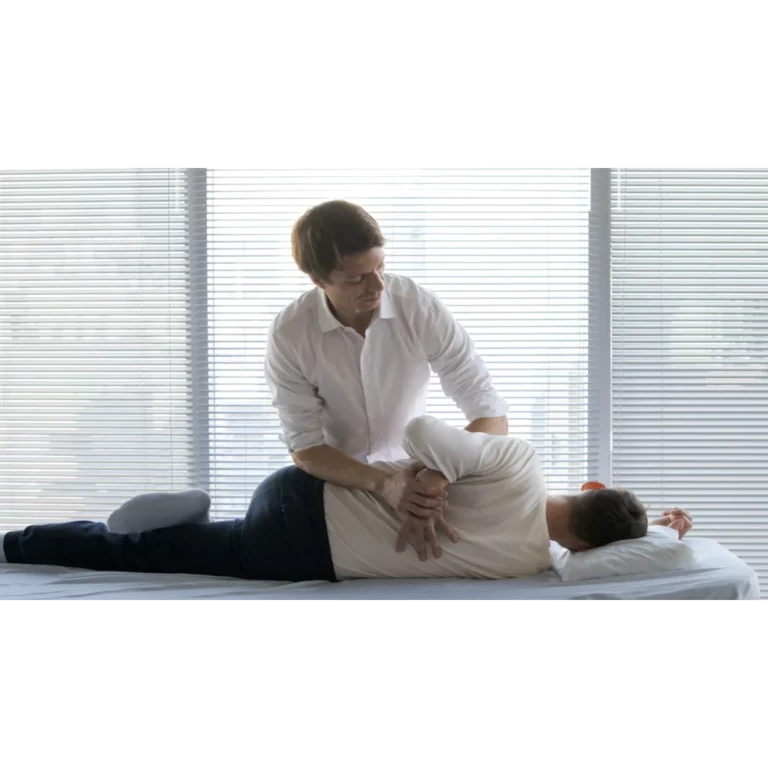
Hands-on care may also have a place when pain, stiffness, or movement restriction is making daily life harder. Osteopathic treatment considers how the spine, ribs, pelvis, abdominal wall, scars, and surrounding soft tissues are working together. At Osteopath Tokyo, postpartum care is adapted to the individual, with attention to comfort, delivery history, current symptoms, and the practical movements that matter in your day. Manual therapy can support mobility and relieve musculoskeletal tension, but it works best alongside appropriate medical follow-up, pelvic health care, and a gradual return to strength.
When to Seek Medical Care Promptly
Some postpartum symptoms need urgent medical assessment rather than self-management or manual therapy. Contact emergency services or your maternity provider promptly for heavy bleeding that soaks a pad in an hour, large clots, chest pain, shortness of breath, fainting, severe headache, vision changes, fever, worsening abdominal pain, one-sided leg swelling or pain, or signs of incision infection.
Mental health also deserves the same seriousness as physical healing. Persistent hopelessness, intense anxiety, panic, inability to sleep even when given the chance, frightening thoughts, or thoughts of harming yourself or your baby require immediate support. Postpartum depression and anxiety are treatable, and asking for help is a protective step for both parent and child.
A More Sustainable Standard for Recovery
A successful recovery rarely looks dramatic from week to week. It may look like less pulling around a scar, fewer headaches after feeding, a longer walk without pressure, or the confidence to lift your baby without guarding your back. These changes matter because they restore freedom in everyday life.
Give your body clear signals that it is supported: enough nourishment, hydration, realistic movement, periods of rest, and skilled care when symptoms persist. You do not need to push through pain to prove you are recovering well. The most durable progress usually comes from responding early, moving patiently, and treating postpartum recovery as a personal process rather than a deadline.