How to Improve Ankle Mobility Without Forcing It
A deep squat that feels blocked at the ankles, a stiff first few steps after sitting at your Tokyo desk, or repeated calf strains during weekend training can all point to the same issue. Learning how to improve ankle mobility can make walking, running, squatting, climbing stairs, and recovering from exercise feel more comfortable. The key is not forcing a greater range of motion. It is understanding why the ankle feels restricted and restoring movement in a way your body can tolerate.
The ankle is a small joint with a large responsibility. It absorbs force with every step, helps you balance on uneven ground, and transfers power from the floor through the legs and hips. When it loses mobility, the body often compensates elsewhere – commonly through the knees, hips, lower back, or feet.
What ankle mobility actually means
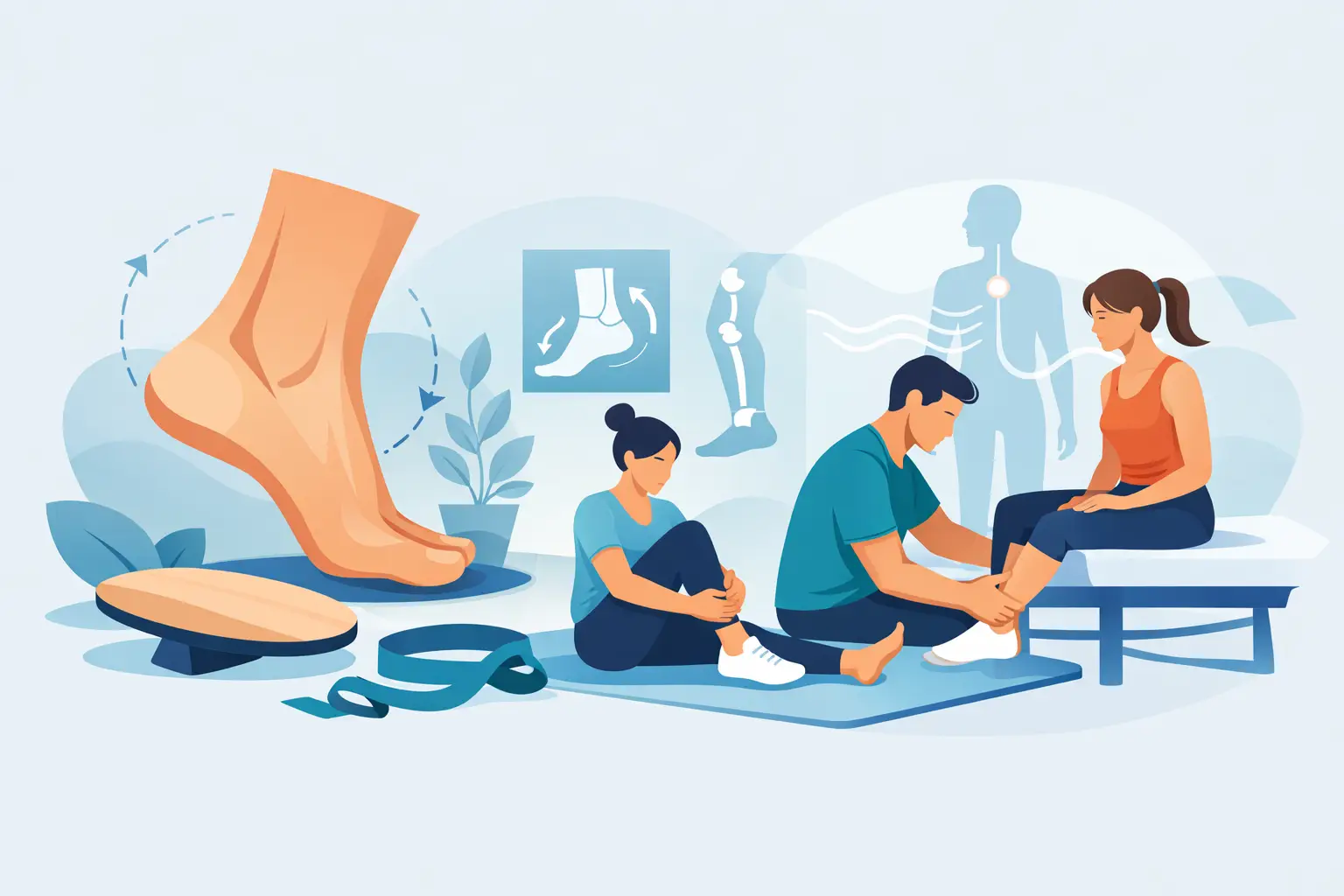
Ankle mobility is not simply the ability to point and flex the foot. For most daily activities and sports, the most useful motion is dorsiflexion: the shin moving forward over the foot while the heel remains on the floor. You need this motion to descend stairs, squat, lunge, walk uphill, and land efficiently when running or jumping.
A limitation can come from several sources. The calf muscles and Achilles tendon may be tight or overworked. The ankle joint itself may not glide smoothly after a sprain, fracture, prolonged immobilization, or repeated loading. Stiffness in the foot, including the midfoot and big toe, can also change how the ankle moves. Sometimes the restriction is protective: your nervous system is limiting range because a tissue is irritated or because the joint does not yet feel stable.
This is why stretching alone does not always solve the problem. A person with muscular tightness may respond well to gradual calf work. Someone with pain, swelling, instability, or a history of significant sprains may need a more individualized assessment.
A simple way to check your ankle range
Try the knee-to-wall test barefoot, beside a wall. Place one foot flat on the floor with the toes a few inches from the wall. Keeping the heel down and the foot pointing straight ahead, bend the knee toward the wall. If the knee can touch the wall without the heel lifting, move the foot slightly farther away and repeat.
Compare both sides. A small difference is common, particularly if one leg has had a previous injury. However, a clear side-to-side gap, pinching at the front of the ankle, pain around the Achilles tendon, or a sense that the ankle may give way deserves attention. Do not push through sharp pain to achieve a measurement.
There is no single perfect distance for every body. Leg length, foot shape, sport demands, and previous injuries all matter. The goal is useful, comfortable movement for your life rather than chasing an arbitrary number.
How to improve ankle mobility with a balanced approach
The most effective plan combines gentle range-of-motion work, calf flexibility, strength, and better control. Spend five to 10 minutes on it most days rather than doing one long, aggressive session each week. Consistency gives the tissues time to adapt without provoking soreness.
Start with controlled ankle motion
Sit with your foot off the ground and slowly draw circles with the ankle in both directions. Keep the movement smooth and explore the full range without forcing the end position. Then point the toes away and pull them back toward the shin 10 to 15 times.
This is a useful starting point in the morning, after a flight, or following long periods of sitting. It can reduce the feeling of stiffness, but it should not cause pain, cramping, or numbness.
Mobilize the knee over the toes
Use the same position as the knee-to-wall test. Let the knee travel forward over the second or third toe while the heel stays grounded. Pause briefly near the end of your comfortable range, then return. Complete two sets of eight to 12 slow repetitions on each side.
Keep the arch of the foot gently supported rather than allowing it to collapse inward. The knee should track in the same general direction as the toes. A mild calf stretch is normal. A sharp pinch at the front of the ankle is a sign to reduce the range and consider professional assessment if it persists.
Stretch both calf muscles
The gastrocnemius and soleus are both important, but they respond to slightly different positions. For a straight-knee calf stretch, place your hands on a wall, step one leg back, and keep that back knee straight with the heel down. Hold a comfortable stretch for 20 to 30 seconds.
Then repeat with the back knee slightly bent. This variation places more emphasis on the soleus, a deeper calf muscle that is especially relevant for ankle dorsiflexion during walking and squatting. Two to three relaxed holds per side are usually enough. Pulling hard on a cold, irritated Achilles tendon is not productive, so make the stretch gentle and gradual.
Build strength in the new range
Mobility that cannot be controlled often disappears under load. Slow calf raises are a practical way to help the ankle and foot use their available range. Rise onto both feet, pause, and lower slowly for three seconds. As this becomes easy and pain-free, progress to one leg at a time.
You can also practice a supported squat or split squat with the heel staying down. Use a chair, countertop, or wall for balance. Focus on letting the knee move forward in line with the toes while maintaining steady pressure through the heel, base of the big toe, and base of the little toe.
For runners and athletes, strength matters as much as flexibility. Better calf capacity can improve force absorption and may reduce the urge to compensate through the knees or hips during training.
Habits that keep ankles stiff
Footwear can influence ankle movement. Very stiff shoes, high heels, or footwear with a raised heel may feel comfortable in the short term but can reduce how often you use full ankle dorsiflexion. This does not mean everyone should immediately switch to minimal shoes. A sudden change can overload the feet and calves, especially if you walk extensively or train regularly.
Instead, vary your movement during the day. Take brief walking breaks after long work sessions, move your ankles before standing after a train ride, and include a few controlled knee-to-wall repetitions before lower-body exercise. If you wear dress shoes for work, changing into more supportive, flexible footwear for your commute or walk can be a sensible middle ground.
Previous ankle sprains are another common reason mobility remains limited. Even a sprain that seemed minor can leave altered joint mechanics, reduced confidence in balance, or stiffness in the surrounding tissues. Repeatedly stretching an ankle that still feels unstable may not address the real problem.
When ankle stiffness needs professional care
Home exercises are appropriate for mild, non-traumatic stiffness that improves gradually. It is wise to seek an assessment sooner if you have persistent swelling, bruising, pain that changes your gait, numbness, night pain, a locking sensation, or difficulty bearing weight. Sudden calf swelling, warmth, or unexplained severe pain requires urgent medical evaluation.
Professional care can also be valuable when a previous sprain, fracture, surgery, or sports injury has left you with one-sided restriction. A thorough assessment should look beyond the ankle itself. Foot mechanics, calf tension, knee and hip movement, balance, training load, and even the way you stand at work can all contribute.
At Osteopath Tokyo, hands-on osteopathic care is individualized to the source of restriction and your comfort level. Treatment may include gentle joint and soft-tissue techniques alongside advice on movement, loading, and exercises that fit your daily routine. For active adults, this can be particularly useful when ankle stiffness is affecting squats, running, court sports, or recovery after training.
Make progress without chasing pain
Expect gradual change rather than an overnight transformation. A healthy mobility practice usually leaves the ankle feeling warmer, easier to move, and no more than mildly worked. If soreness lasts more than a day, reduce the intensity, repetitions, or range next time.
Pay attention to what changes outside the exercise session. Are stairs easier? Does your squat feel smoother? Can you walk longer without calf fatigue? Those functional improvements are often more meaningful than forcing the knee farther toward a wall. Give the ankle regular, well-controlled movement, and let comfort and confidence guide the pace.