How to Release Thoracic Spine Stiffness Safely
A stiff upper back can make a normal workday feel disproportionately difficult. You may notice it when you turn to check traffic, reach overhead, take a full breath, or try to sit comfortably after hours at a laptop. To release thoracic spine stiffness, the goal is not to force a dramatic crack. It is to restore comfortable movement through the upper and middle back while addressing the habits, muscle tension, and neighboring areas that keep it restricted.
The thoracic spine is the section of the back between the neck and low back. It connects to the ribs, supports the shoulder blades, and helps the body rotate, extend, and breathe efficiently. When it becomes stiff, other regions often compensate. The neck may work harder, the shoulders may round forward, or the low back may arch excessively during reaching and exercise.
Why Thoracic Spine Stiffness Develops
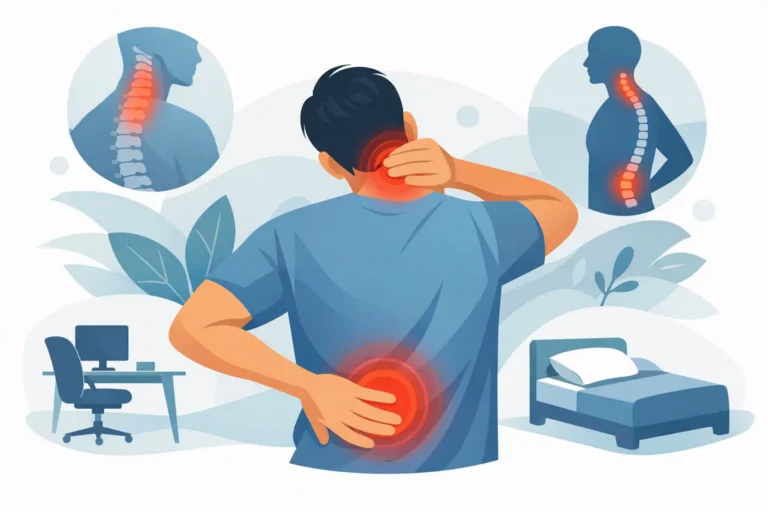
For many Tokyo professionals, thoracic stiffness is not caused by one single event. It builds gradually through long periods of sitting, commuting, working on a phone, carrying a bag on one side, or training without enough recovery. Stress can add another layer. When the nervous system is under pressure, breathing often becomes shallower and the muscles around the ribs, chest, neck, and shoulders may remain subtly guarded.
A previous injury can also contribute. A shoulder problem, a fall, rib irritation, or recurring low back pain may change how you move long after the initial symptoms settle. Pregnancy and the postpartum period can create similar changes as posture, breathing mechanics, and load distribution adapt.
Stiffness does not always mean the joints themselves are the only issue. Tight chest muscles, reduced shoulder mobility, limited rib movement, and fatigue in the upper-back muscles can all create the feeling that the thoracic spine is “stuck.” This is why a whole-body assessment is often more useful than focusing only on the painful spot.
How to Release Thoracic Spine Stiffness at Home
Gentle, consistent movement is generally more helpful than an occasional aggressive stretch. The right approach should leave you feeling easier and more mobile, not sore, unstable, or irritated the next day. If a movement causes sharp pain, tingling, dizziness, or pain spreading into the arm, stop and seek professional guidance.
Start With Breathing and Rib Movement
Lie on your back with your knees bent, or sit supported in a chair. Place your hands around the lower sides of your rib cage. Take a slow breath in, allowing your ribs to expand sideways into your hands. Exhale without forcing the air out, and let the shoulders soften.
Repeat for five to eight breaths. This may seem simple, but the ribs and thoracic spine are closely connected. Improving rib movement can reduce unnecessary tension in the upper back and neck, especially when stiffness is linked with prolonged sitting or stress.
Add Gentle Thoracic Extension
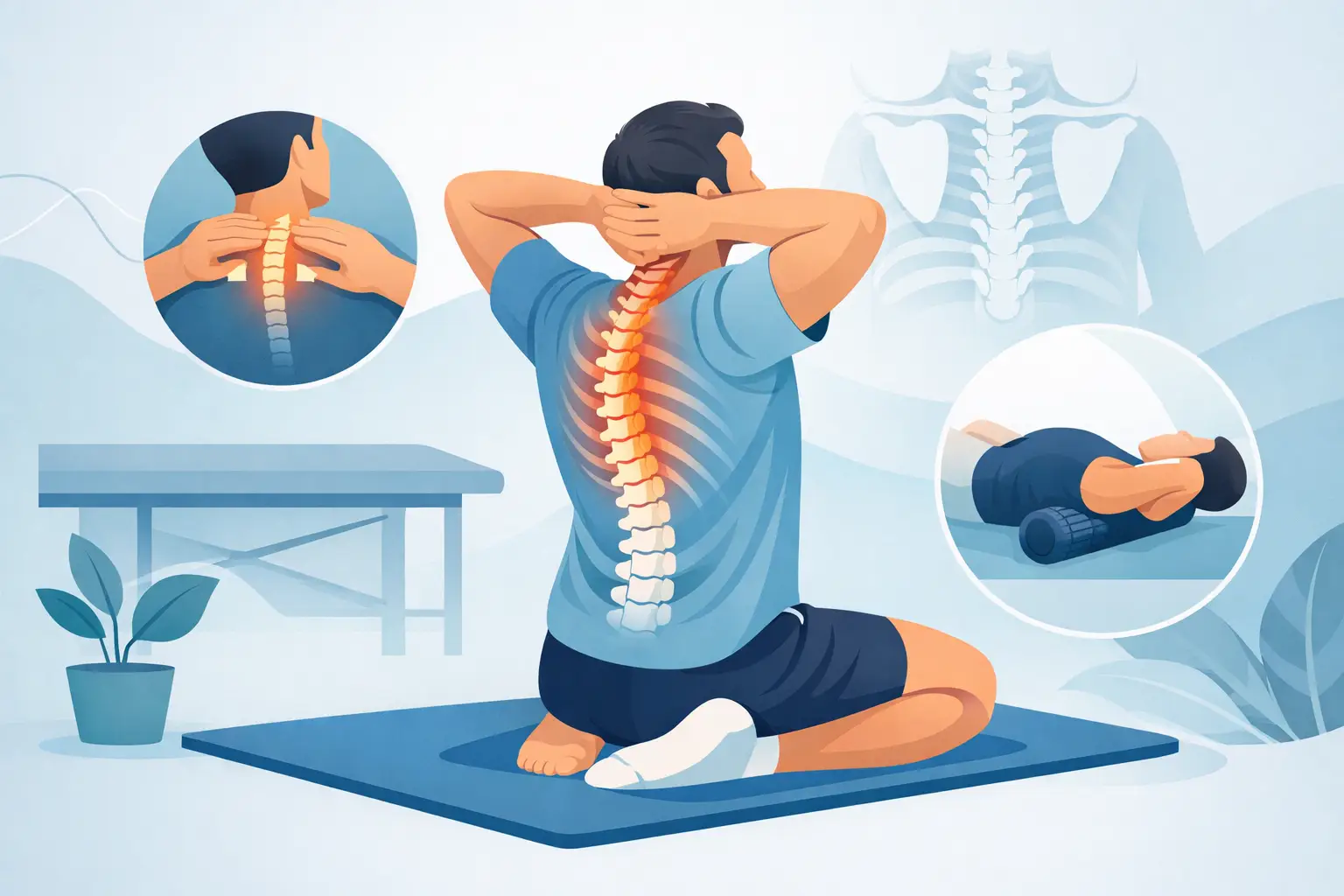
Sit on a chair with a firm backrest reaching to the middle of your back. Place your hands behind your head and gently lean your upper back over the backrest as you exhale. Keep your low back relaxed rather than forcing it to arch. Return to neutral and repeat five or six times.
This movement is useful for the rounded posture that can develop during computer work. It should feel like a mild opening across the chest and upper back, not a pinch in the low back or neck. If it is uncomfortable, reduce the range of motion or place your hands across your chest instead.
Practice Controlled Rotation
Sit tall with your feet on the floor and cross your arms over your chest. Slowly rotate your rib cage to one side while keeping the pelvis relatively still. Pause for a comfortable breath, then return to center and repeat on the other side.
Rotation is a key function of the thoracic spine. However, symmetry is not the goal. Most people have a side that feels more restricted, often related to their work setup, dominant hand, sport, or previous injury. Work within a calm, pain-free range rather than trying to make both sides look identical.
Combine Shoulder Movement With Upper-Back Control
Stand against a wall with your head, upper back, and pelvis comfortably supported. Raise your arms slowly as if making a snow angel, stopping before the shoulders shrug or the low back lifts away from the wall. Lower with control.
This connects thoracic mobility with shoulder mechanics. It is particularly valuable if your stiffness appears during overhead training, swimming, tennis, climbing, or simply reaching for items on high shelves. The exercise is not about reaching the highest position. Good control matters more than range.
Small Daily Changes That Make Movement Last
A ten-minute mobility routine cannot fully offset ten hours of stillness. Rather than chasing perfect posture, create more opportunities to change position. Stand up between meetings, walk briefly after a train ride, alternate your phone hand, and avoid working for long periods with the screen too low.
Your workstation should support variety. Position the top of the screen roughly at eye level, keep the keyboard close enough that you do not reach forward, and use the chair back when you need support. Even an excellent setup becomes uncomfortable if you remain in it for too long.
Exercise selection also matters. If you train regularly, include pulling movements, controlled rowing patterns, and upper-back endurance work alongside pressing exercises. If your work or sport is already demanding, adding more intense stretching is not always the answer. Recovery, sleep, adequate training progression, and breathing quality may matter just as much.
When Self-Care Is Not Enough
Home exercises are appropriate for many mild, gradual cases, but persistent stiffness deserves closer attention when it keeps returning or affects sleep, work, sport, or breathing. An assessment can identify whether the primary limitation comes from the thoracic joints, ribs, shoulder girdle, neck, low back, or tension patterns throughout the body.
At Osteopath Tokyo, treatment is individualized rather than based on a standard series of adjustments. After listening to your history and assessing movement, an osteopath may use gentle joint mobilization, soft-tissue techniques, work around the ribs and diaphragm, and carefully selected exercises. Some patients benefit from direct manual treatment; others need a more gradual approach because their symptoms are sensitive, stress-related, or connected to an old injury.
The aim is not simply to create temporary looseness. It is to help the body move with less compensation, improve tolerance for daily demands, and give you practical strategies that fit your routine. For active adults, that may mean returning to training with better overhead mobility. For office-based professionals, it may mean sitting, traveling, and breathing more comfortably by the end of the day.
Symptoms That Need Medical Evaluation First
Upper-back stiffness is commonly musculoskeletal, but it should not be assumed to be harmless in every situation. Seek prompt medical assessment for chest pressure or pain, unexplained shortness of breath, fainting, fever, sudden severe pain, significant trauma, unexplained weight loss, or new weakness or numbness. These symptoms may require medical care rather than manual therapy.
It is also wise to obtain individualized advice if you have osteoporosis, a history of cancer, inflammatory arthritis, recent surgery, or a known spinal condition. A careful practitioner will adjust the assessment and treatment plan to your health history and comfort level.
A thoracic spine that moves well should support your life quietly: easier breathing, freer shoulders, a more comfortable neck, and less effort during everyday movement. Start gently, move often, and if the stiffness continues to limit you, seek hands-on care that looks beyond the place where you feel it most.