How to Recover From Sports Strain
You felt the pull mid-run, during a gym session, or the morning after tennis when a familiar movement suddenly became sharp and limited. If you are wondering how to recover from sports strain, the first priority is not to push through it. A strain is your body’s way of telling you that muscle or tendon tissue has been overloaded, and the next few days often determine whether it settles quickly or becomes a longer, more frustrating problem.
A sports strain can range from mild tightness to a more significant tear. Calf strains, hamstring strains, groin strains, lower back strains, and shoulder strains are especially common in active adults. In a city like Tokyo, many people try to fit training around long work hours, crowded commutes, and inconsistent recovery. That combination can make small injuries linger.
What a sports strain actually means
A strain affects muscle fibers or the tendon that connects muscle to bone. It usually happens when the tissue is asked to absorb more force than it can manage, often during sprinting, lifting, sudden changes of direction, or repetitive overload without enough recovery.
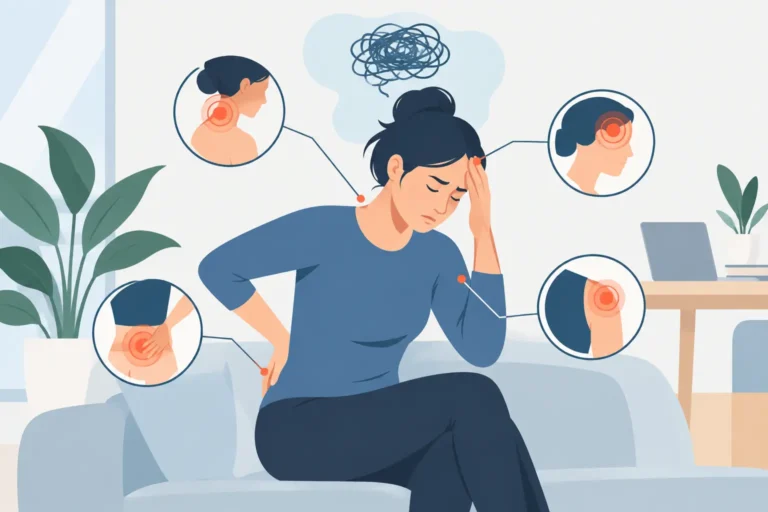
The symptoms can vary. You may notice sharp pain during movement, stiffness after rest, tenderness to touch, swelling, weakness, or a sense that the area is not functioning normally. Mild strains can improve within days. Moderate strains often take several weeks. More severe injuries may need a longer rehabilitation plan and, in some cases, imaging or referral.
This is where people often go wrong. They assume all strains simply need rest, or they return to exercise as soon as the pain becomes tolerable. Neither approach is ideal. Too much rest can lead to stiffness and deconditioning. Too much activity too soon can reinjure healing tissue.
How to recover from sports strain in the first 72 hours
The early phase is about protecting the injured area while keeping the rest of the body as calm and mobile as possible. Relative rest is usually the right approach. That means reducing painful activity rather than stopping all movement completely.
If walking is comfortable, gentle walking may be helpful. If your hamstring hurts when you run, you stop running. If your shoulder strain is aggravated by overhead lifting, you avoid that load. The goal is to reduce irritation, not create complete inactivity.
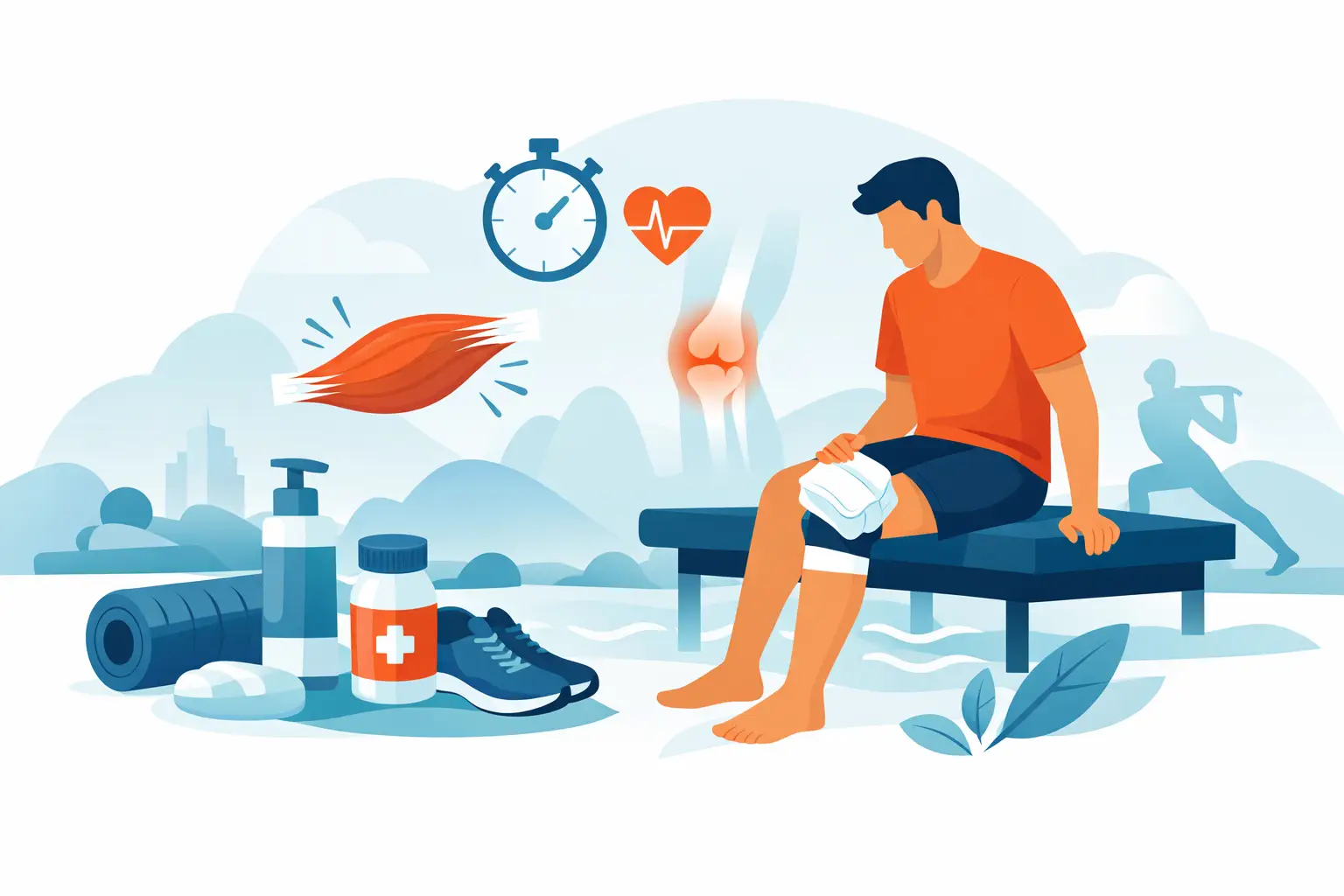
Ice can be useful for pain relief, especially in the first day or two, but it is not a cure. Apply it briefly and avoid placing ice directly on the skin. Compression and elevation may help if there is visible swelling, particularly in the leg. Some people also benefit from short-term support taping, although this depends on the area involved and should not replace proper recovery.
Pain is an important guide. Mild discomfort with gentle movement can be acceptable. Sharp pain, limping, or progressive tightening during activity usually means you are doing too much. If the area bruises significantly, gives way, or becomes difficult to use, the strain may be more substantial than it first seemed.
The mistake most active adults make
The biggest mistake is testing the injury too early. A calf feels better, so you try a run. A back strain eases, so you go straight back to deadlifts. Pain often decreases before the tissue has regained strength and load tolerance.
This is why recovery needs phases. First calm the irritated tissue. Then restore comfortable movement. Then rebuild strength. Then return to sport. Skipping the middle steps is what turns a short setback into a recurring problem.
For many patients, the real issue is not just the strained tissue. It may be poor hip control contributing to a hamstring strain, restricted ankle mobility overloading the calf, spinal stiffness affecting rotation in tennis, or fatigue and stress reducing coordination. Treating only the painful spot can miss the reason it happened.
When to start moving again
Gentle, pain-limited movement usually begins earlier than people expect. Once severe pain has eased, careful mobility work can support circulation, reduce stiffness, and help the body recover normal patterns.
For a mild thigh or calf strain, that might mean controlled ankle pumps, easy range-of-motion drills, or slow walking before any stretching. For a shoulder strain, it may involve small supported movements that do not provoke sharp pain. Aggressive stretching too early can irritate healing tissue, especially if the strain happened through sudden lengthening, as with hamstrings or groin muscles.
A useful rule is this: movement should leave the area feeling the same or better afterward, not more reactive later that day or the next morning. Delayed worsening is a sign that the dose was too high.
Strength matters more than stretching
People often focus on flexibility because tightness feels obvious. But after a sports strain, strength and load control usually matter more than trying to force length into the tissue.
As pain settles, recovery should include gradual strengthening. Early exercises are often isometric, meaning the muscle works without large movement. These can reduce pain and begin rebuilding tolerance. Later, the muscle needs more dynamic loading, then sport-specific loading.
For example, a calf strain may progress from supported heel raises to single-leg heel raises, then skipping, then return-to-run drills. A groin strain might begin with light adductor activation and progress toward lateral movement control. A lower back strain may require trunk endurance, hip mobility, and improved movement mechanics rather than endless stretching.
This is where individualized assessment matters. The right progression depends on the tissue involved, the severity of the strain, your sport, and your baseline conditioning.
When hands-on treatment can help
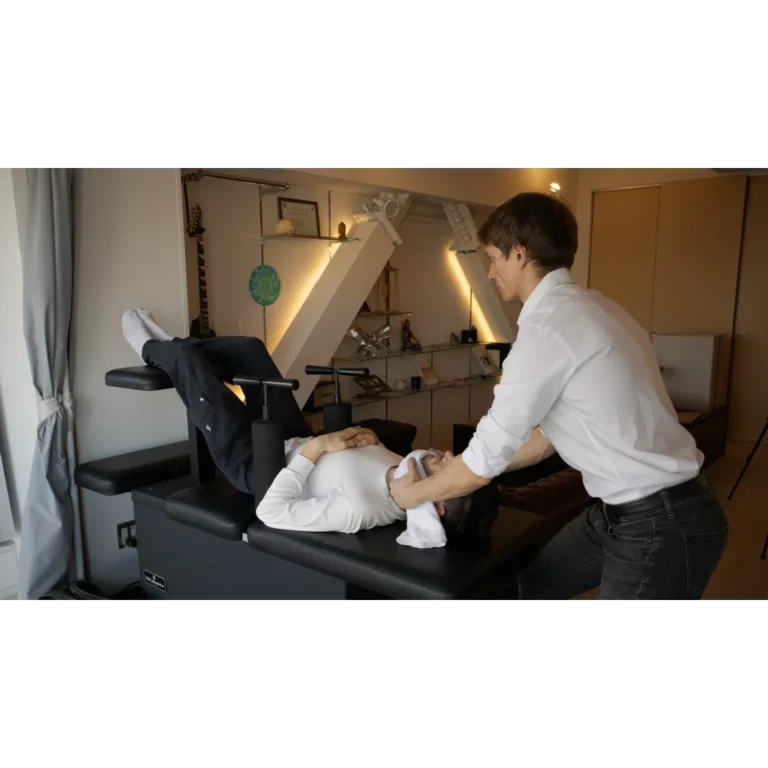
If pain is not improving as expected, if the area keeps tightening, or if you are unsure how to return to activity safely, hands-on care can be useful. Osteopathic treatment is not simply about easing symptoms in the moment. The value lies in identifying what is limiting recovery and what compensation patterns may be keeping the strain active.
An osteopathic assessment looks at the injured area in the context of the whole body. If you strained your hamstring, the examination may also include pelvis mechanics, lumbar mobility, glute function, and gait. If you strained your shoulder, neck and rib mobility may matter as much as the shoulder itself.
Treatment may include soft-tissue work, gentle joint mobilization, myofascial release, and guided movement advice to reduce guarding and improve tissue function. In a practice such as Osteopath Tokyo, the focus is on one-on-one care that is tailored to the individual, especially for active adults who want a precise and practical recovery plan.
Signs you should not ignore
Most sports strains improve with the right management, but some need prompt professional assessment. Seek care sooner if you heard a pop at the time of injury, cannot bear weight properly, have major swelling or bruising, notice significant weakness, or the pain is severe even at rest.
You should also be cautious if symptoms are not improving after several days, if the same strain keeps returning, or if pain is spreading in a way that suggests a different diagnosis. Sometimes what seems like a strain is actually tendon injury, joint irritation, nerve involvement, or referred pain from another area.
For runners, gym-goers, recreational athletes, and busy professionals, the challenge is often deciding whether to wait or get help. A good rule is simple: if you cannot confidently map out a safe return to normal activity, an expert evaluation is worth it.
Returning to sport without setting yourself back
The final stage of how to recover from sports strain is not just being pain-free on the treatment table or during daily life. It is being able to tolerate the forces of your sport again.
That means testing the body in a graded way. A runner should not go from rest to a full-distance run. A tennis player should not return with maximum serves first. A gym athlete should not resume previous loads in the first session back. Start with reduced intensity, lower volume, and more recovery between sessions.
You also want to watch what happens the next day. Tissue that tolerates the session but flares overnight is not quite ready for that level yet. Recovery is not always linear. Some ups and downs are normal, but the overall trend should be steady improvement in strength, confidence, and movement quality.
One more point matters here: sleep, stress, and workload influence healing more than many people realize. A body under-recovered from work stress, poor sleep, or heavy training blocks is more vulnerable to both the initial strain and a delayed recovery. Good rehab respects that reality.
If you are active, motivated, and used to pushing through discomfort, patience can be the hardest part. But good recovery is not passive. It is precise. Protect the tissue early, restore movement thoughtfully, rebuild strength progressively, and get the right support if things are not improving. Done well, a strain can become a reset point that leaves you moving better than before.