Craniosacral Therapy
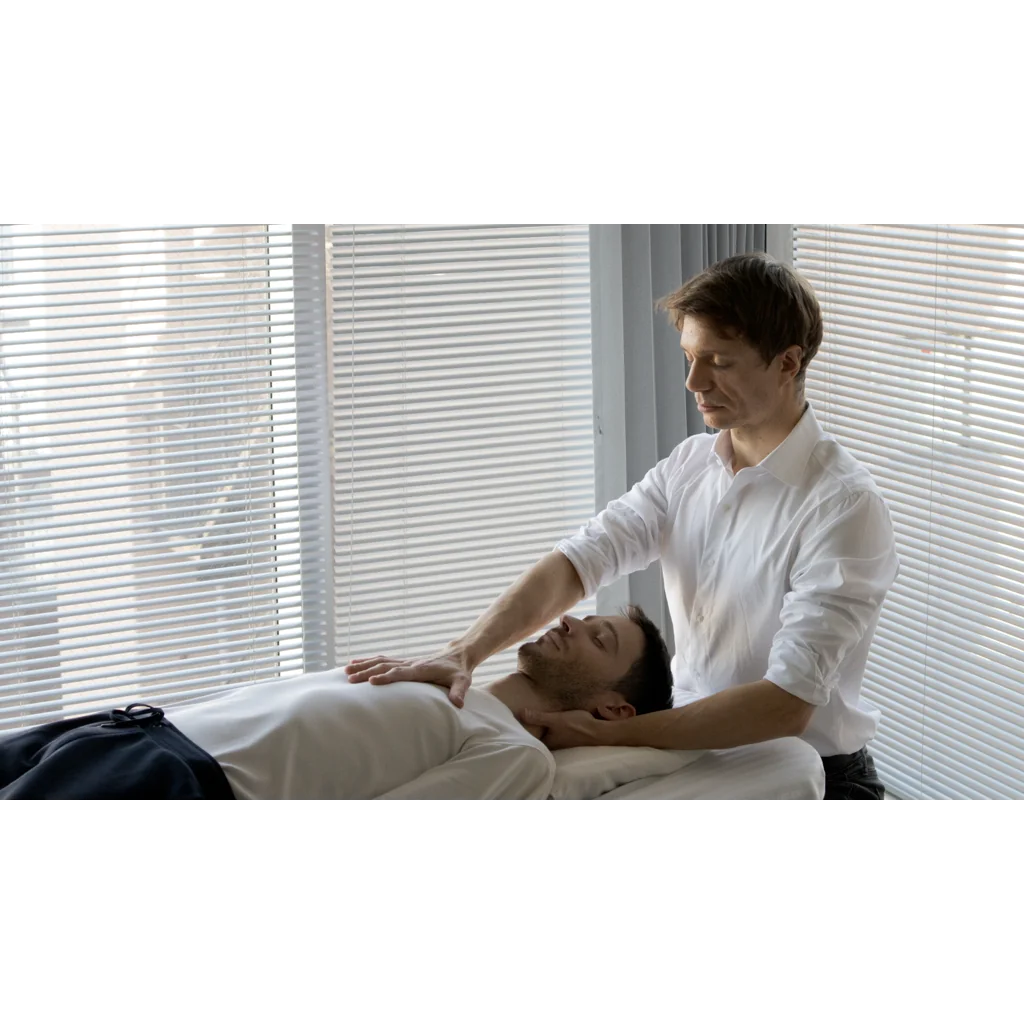
Craniosacral therapy is one of the most refined and gentle techniques I use. The contact is so light that many of my patients are surprised that something so subtle can produce such tangible change. Rather than working with force, I use a precise, listening pressure on the skull, the sacrum and the inner membranes that surround the central nervous system. It is a very relaxing technique with a deep impact on the whole head and spine.
The skull is not a single fused bone, as is sometimes assumed. It is composed of multiple plates separated by sutures that retain a small but measurable mobility throughout life. The sacrum, at the base of the spine, is connected to the cranium through a continuous system of dural membranes that travel the length of the spinal canal. When tension accumulates along this axis — through trauma, posture, stress, dental work or birth itself — it influences how the entire nervous system regulates pain, mobility and recovery.
By following the natural rhythms of the cerebrospinal fluid and the surrounding membranes, I can ease patterns of strain that more direct techniques cannot reach. The effects often extend well beyond the head and spine. Patients commonly report deeper sleep, fewer headaches, a clearer mind, calmer breathing and a sense that the nervous system has finally been allowed to settle.
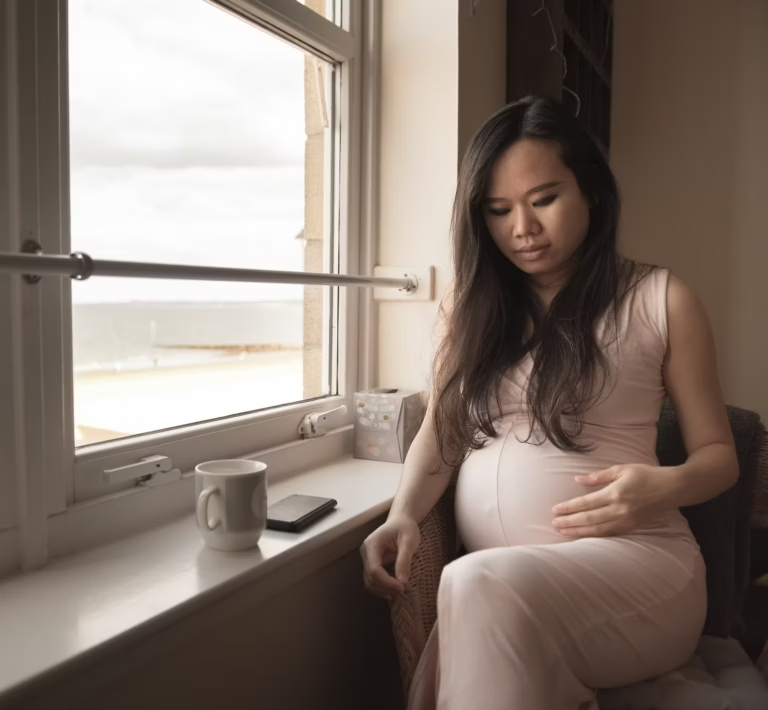
Because of its gentleness, craniosacral therapy is particularly well suited to sensitive presentations: migraines and recurrent headaches, TMJ dysfunction, post-concussion symptoms, stress-related tension, pregnancy and post-partum recovery, and infants. I rarely use it in isolation — within an osteopathic session, it is one of several tools I choose according to what your body shows on the day.